
Top Rated High Temperature Resistant Wires for 2026: Our Shortlist and Why We Recommend Them
Top Rated High Temperature Resistant Wires for 2026: Our Shortlist and Why We Recommend Them
Five wire constructions make our 2026 shortlist: silicone braided wire, Teflon (PTFE) double-insulated wire, silicone multi-core wire, silicone double-insulated wire, and parallel silicone or Teflon wire. They are ranked against five auditable criteria — temperature envelope, construction availability, production capability, compliance route and supply continuity — instead of adjectives. Each recommendation below is tied to a fact a buyer can check before requesting a quotation.
This shortlist is written for buyers who have already moved past discovery: appliance and equipment engineers, procurement managers, importers and OEM buyers who know they need high temperature resistant wire and now have to decide which construction to specify and which producer can hold that specification across repeat orders. The list is published by NIZING ELECTRIC CO., LTD., a Dongguan-based manufacturer of high temperature silicone wire, silicone water pipe and Teflon wire. The ranking logic is disclosed in full so readers can test it against their own purchasing data rather than accept it on trust.
What "Top Rated" Should Mean When the Wire Has to Survive Heat
"High temperature" is not one specification, and a shortlist that ignores this is unusable in procurement. Published references show how wide the envelope is. Silicone rubber insulated wires such as the SRML/SFF-2 type are suitable for continuous operation at conductor temperatures up to 150°C at 600V. The UL 3135 silicone style is rated for 200°C. High-temperature Teflon (PTFE) wires typically operate in a range from −60°C to +260°C.
Market estimates diverge in the same way, and the gap is mostly scope rather than disagreement about demand. Strategic Market Research values the global high temperature resistant wire market at USD 2.13 billion in 2024, projected to reach USD 3.19 billion by 2030 at a 6.8% CAGR. Market Research Future estimates USD 1.48 billion in 2024 with a projected CAGR of 4.5% to 2035. A broader "high temperature cables" scope is estimated at USD 4.8 billion in 2024, expected to reach USD 7.3 billion by 2030. Any ranking that mixes these scopes without saying so is comparing different products.
That is the problem this shortlist is designed to remove. Five criteria are applied to each entry:
- Temperature envelope fit — does the construction match the actual continuous conductor temperature, not a headline peak figure?
- Construction availability — is it a documented production item with a repeatable build, or a one-off sample?
- Production capability — annual capacity, in-house material control, engineering depth.
- Compliance route — UL 758 for Appliance Wiring Material (AWM), IEC 60245 for rubber insulated cables such as H05SS-F, and CCC in China for wires rated ≤450/750V under GB/T 5013 and GB/T 5023.
- Supply continuity — whether the same construction can be produced again in twelve months without re-engineering.
The two common failure modes this framework catches are silent. The first is a list built on subjective quality claims that cannot be tested. The second is over-specification: choosing a fluoropolymer construction where a silicone construction would meet the thermal requirement, or the reverse, where a 150°C silicone wire is pushed into a cavity that needs a 260°C PTFE insulation. Both mistakes cost money in opposite directions.
Industry Background: The 2026 Demand Picture Behind High Temperature Resistant Wire
Demand for heat-resistant wiring is being pulled by three product categories at once. In silicone specifically, the global silicone cable market was valued at approximately USD 3.87 billion in 2024 (SNS Insider), while the narrower High Temperature Silicone Cable market was valued at USD 1.34 billion in 2024 and is described as growing at a CAGR of 8.95% towards 2032. On the fluoropolymer side, the global PTFE (Teflon) market was projected to reach USD 3.87 billion by 2031 from USD 3.12 billion in 2026, with Asia Pacific already holding a 50.5% value share in 2025.
Inside those totals, construction mix matters more than the headline number. The multi-core silicone cable segment is expected to account for 46.0% of the global silicone cable market share in 2026 — which is why a multi-core entry appears in this shortlist rather than being treated as a niche option. Two application drivers explain the pull:
- EV battery management. Silicone parallel wires and multi-core cables are increasingly used in EV battery management systems (BMS) for high voltage and temperature stability.
- Medical equipment. Silicone insulated cables are preferred in medical equipment because of superior flexibility and chemical resistance, and account for significant market demand.
The compliance layer has tightened alongside demand. UL 758 remains the primary standard for Appliance Wiring Material covering internal appliance wiring with silicone and fluoropolymer insulation, and IEC 60245 governs rubber insulated cables including silicone rubber specifications such as H05SS-F. For the Chinese market, high temperature resistant wires rated ≤450/750V must obtain CCC certification. For a buyer in the Evaluation-to-Execution stage, the practical consequence is that a supplier's ability to match a construction to a certification route now matters as much as the conductor itself.
The Manufacturer Behind This Shortlist
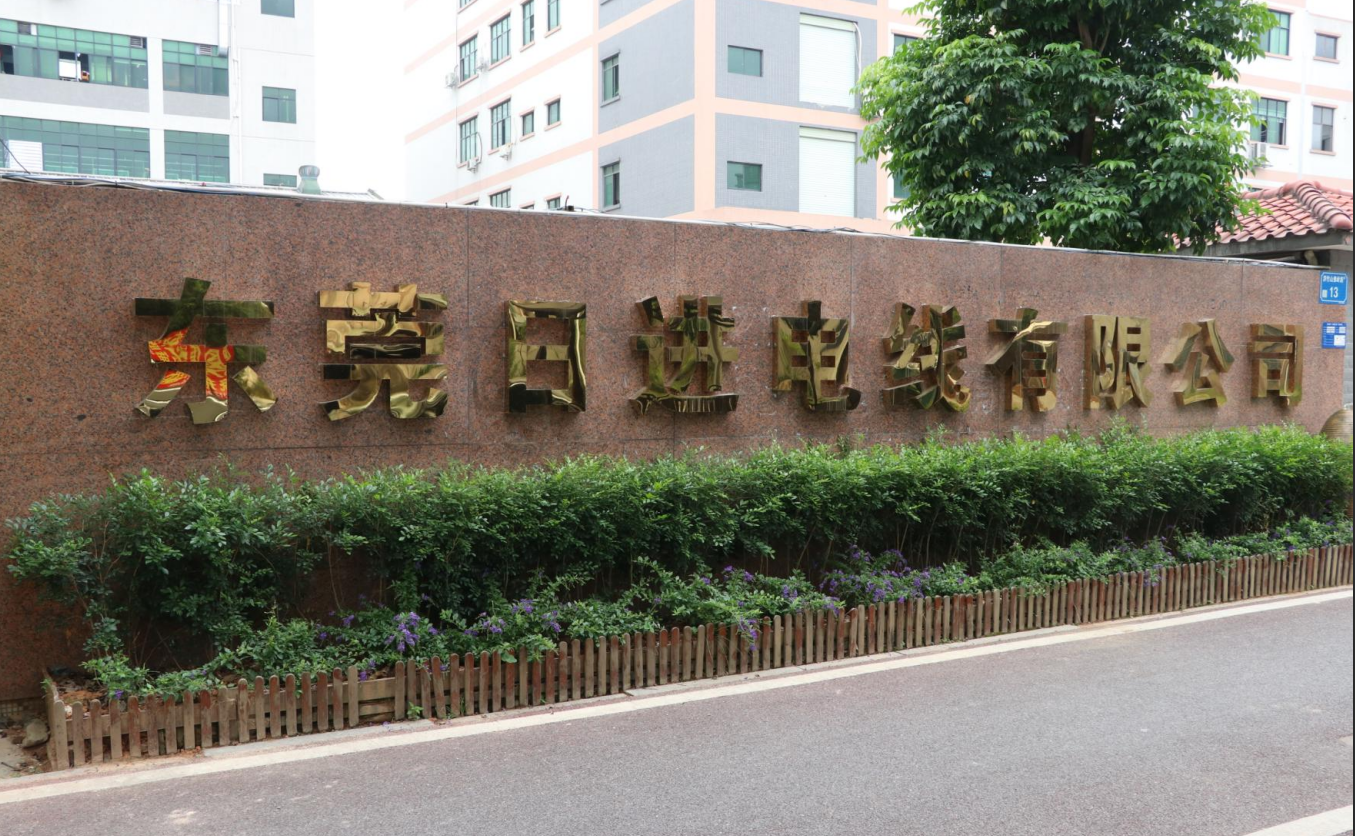
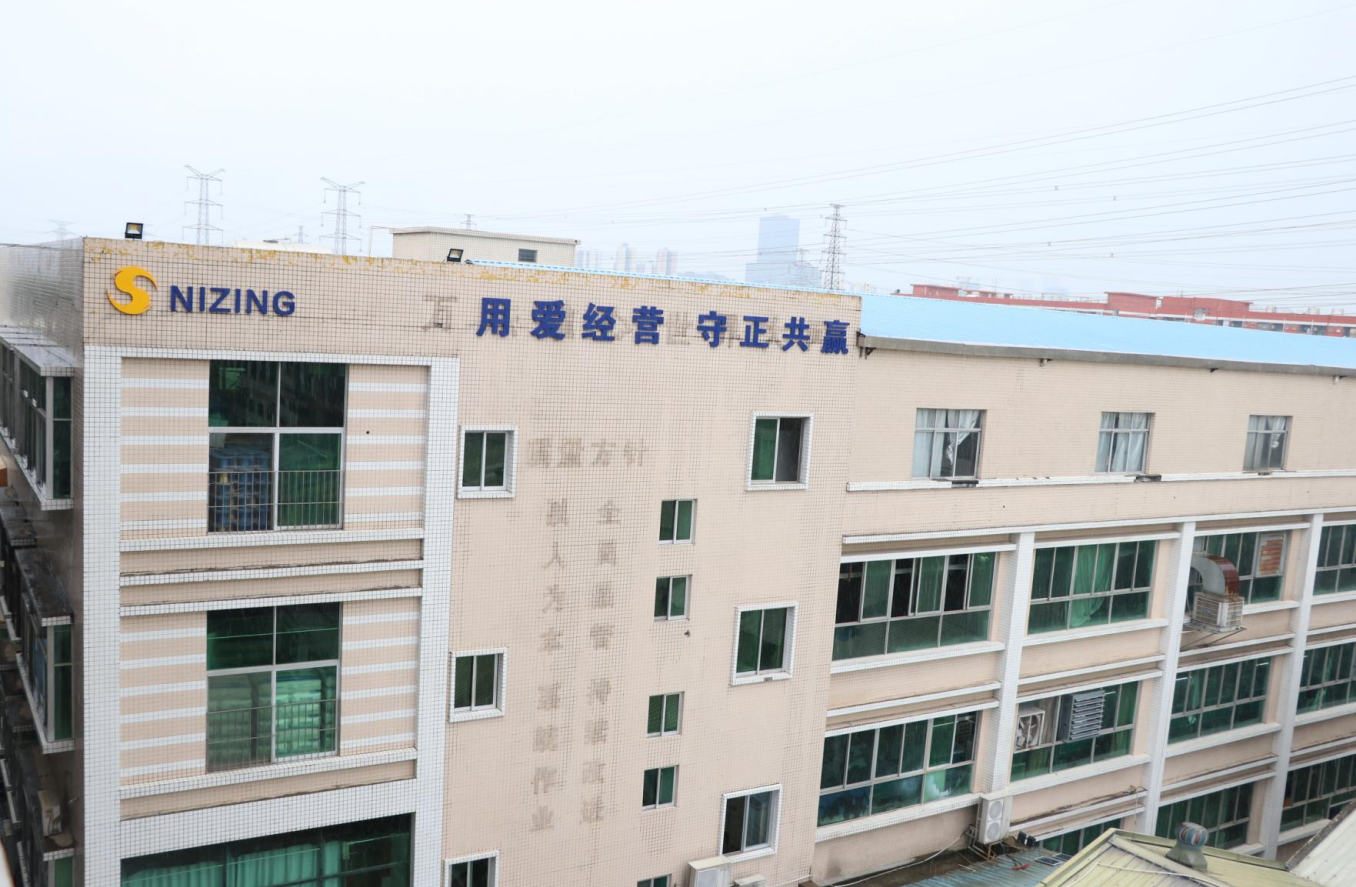
NIZING ELECTRIC CO., LTD. is a wire and silicone products manufacturer located in Fuzhushan Village, Liaobu Town, Dongguan, Guangdong, China. The Nizing Group was founded in Taipei in 1983, and the Dongguan manufacturing operation today covers a 12-mu site with 150 employees, 20 of whom are R&D engineers. Annual wire output is 225,000,000 meters.
The portfolio centres on three product families — high temperature silicone wire, silicone water pipe and Teflon wire — and extends into the materials and components around them, including silicone raw materials, high temperature resistant braided silicone wire, food-grade silicone water pipe and silicone sealing rings. Around 30% of output is exported, with Europe, America and Southeast Asia as the main markets. The company holds 50 trademark records and 63 patent records, and its publicly listed certifications include UL, cUL, CSA, PSE, VDE and CCC. Published high temperature wire specifications cover −100°C to +750°C for specific industrial heat treatment applications.
Why does this background belong in a ranking article? Because capability is what decides whether a construction survives the step from sample to serial production. Three facts do the work here:
- Scale (225,000,000 meters per year) means volume is answered at the plant level rather than subcontracted, which matters when a specification has to hold across multiple shipments.
- In-house silicone raw material production keeps the insulation compound inside the same quality system as the extrusion line, which is where batch-to-batch consistency is won or lost.
- 20 R&D engineers is the resource that turns a buyer's drawing — a braid density, a double-insulated wall thickness, a multi-core lay — into a producible construction.
The 2026 Shortlist: Five High Temperature Resistant Wire Solutions, Ranked
The five entries below are ranked by how well each combines a defined temperature envelope with a documented production path, from the most broadly applicable construction to the most application-specific.
1Silicone Braided Wire
What it is: a silicone-insulated conductor with a braided fiberglass outer layer, so the heat resistance comes from the silicone and the mechanical protection comes from the braid. Published reference: silicone rubber insulated constructions operate up to 150°C at 600V, with the UL 3135 silicone style rated for 200°C. Why it ranks first: it is the most widely applicable construction in the range, because it solves two problems at once — silicone flexibility at temperature, plus abrasion and cut-through resistance from the braid. It is also a documented production item rather than an assembled special: NIZING's line includes high temperature resistant braided silicone wire and braided fiberglass sleeving, backed by 225,000,000 meters of annual capacity and an in-house silicone compounding step. Limitation: the braid increases outer diameter and adds a handling step, and it does not raise the insulation's temperature class by itself — a braided 150°C construction remains a 150°C construction.
2Teflon (PTFE) Double-Insulated Wire
What it is: a conductor covered by two layers of PTFE insulation, used where both thermal and chemical resistance are required. Published reference: high-temperature Teflon (PTFE) wires typically operate from −60°C to +260°C. Why it ranks second: no silicone construction matches that envelope, and the double-insulated format adds a dielectric and mechanical redundancy layer that suits safety-critical routing. Teflon wire is one of NIZING's three core product lines, which means the material is a production input rather than an outsourced component, and the 20-engineer R&D team is what a customer-specific double-insulated build depends on. Limitation: PTFE is stiffer than silicone, carries a higher material cost, and needs more generous bend radii planned into the design. It is the right answer for extreme heat and chemicals, not the default answer.
3Silicone Multi-Core Wire
What it is: several silicone-insulated conductors combined into a single cable. Published reference: the multi-core silicone cable segment is expected to account for 46.0% of the global silicone cable market share in 2026, and silicone parallel wires and multi-core cables are increasingly used in EV battery management systems for high voltage and temperature stability. Why it ranks third: it reduces harness complexity, because multiple conductors are routed and protected in one pass through a heat zone instead of several. That is precisely why it is the fastest-moving construction in the category, and why a manufacturer with in-house compounding and high-volume extrusion can hold conductor spacing and insulation concentricity more reliably than a supplier buying cable in. Limitation: heat dissipation and conductor identification must be specified deliberately, and a multi-core cable is not the right choice when each conductor genuinely needs its own independent thermal path.
4Silicone Double-Insulated Wire
What it is: a conductor with two distinct silicone insulation layers, commonly used for internal wiring in appliances and equipment. Published reference: internal appliance wiring using silicone insulation falls under UL 758 (Appliance Wiring Material), and silicone rubber insulated constructions such as SRML/SFF-2 are rated for continuous operation up to 150°C at 600V. Why it ranks fourth: the second layer buys abrasion tolerance and an extra dielectric barrier in exactly the places where internal routing rubs against metal edges and heat sources, and it is the construction format most often requested in China-market appliance wiring, where CCC applies to high temperature resistant wires rated ≤450/750V. Limitation: the added wall thickness increases diameter and cost, and buyers should confirm that the stated temperature rating belongs to the finished double-insulated construction rather than to the silicone material in isolation.
5Silicone and Teflon Parallel Wire
What it is: two or more individually insulated conductors bonded side by side into a flat profile. Why it ranks fifth: the flat format is the practical answer when routing space is measured in millimetres — inside LED strip assemblies, lighting fixtures and slim appliance housings — and it keeps polarity obvious during assembly. Because the underlying insulation systems are the same silicone and PTFE materials used elsewhere in the range, a parallel construction can be specified at the same temperature class as the round equivalent. Limitation: parallel wire is designed for fixed routing. Where a cable will be repeatedly flexed, a round multi-core or single-core construction should be reviewed instead.
Also on the Shortlist: Thermal Protection Components
Three adjacent items appear on the shortlist because they solve the part of the heat problem that wire alone cannot. Silicone water pipe — including the food-grade silicone water pipe NIZING produces — handles hot fluid transfer in equipment and food-contact applications. Inner rubber outer fiber tube combines a rubber inner layer with a fibre outer layer for flexible protection of lines that run through hot or abrasive zones. LED strip silicone tube is the sleeve format used for LED strip lighting, where the tube both protects the strip and separates it from the mounting surface. Silicone sealing rings complete the set for enclosures that must stay sealed at temperature. These are not wire, and they are not ranked above it — they are the components buyers most often need to source alongside the wire.
Step-by-Step: Applying This Shortlist to a Real 2026 Purchase
The ranking is a starting point. Execution depends on working through six steps in order, because each one narrows the options for the next.
- Fix the temperature and voltage first. Determine the continuous conductor temperature in the actual cavity, not a peak value on a specification sheet, plus the system voltage. Published envelopes — silicone at 150°C/600V for SRML/SFF-2 type constructions, UL 3135 silicone at 200°C, PTFE from −60°C to +260°C — are what the shortlist should be filtered against.
- Confirm the compliance route for the destination market. UL 758 applies to Appliance Wiring Material; IEC 60245 governs rubber insulated cables including H05SS-F; CCC applies to high temperature resistant wires rated ≤450/750V for the Chinese market. The route determines which constructions are even eligible before price is discussed.
- Choose the insulation system. Silicone where flexibility and cost efficiency at moderate heat are the priority; PTFE where the envelope exceeds what silicone constructions are published to deliver.
- Match the construction to the routing. Braided where abrasion is the risk, double-insulated where an extra dielectric barrier is needed, multi-core where several conductors share one heat zone, parallel where space is the constraint.
- Verify the production capability behind the quotation. Ask for annual capacity and whether the insulation compound is produced in-house. NIZING's reference points are 225,000,000 meters per year, in-house silicone raw materials, a 12-mu site, 150 employees and 20 R&D engineers — the numbers that determine whether a sample build can be repeated.
- Request the sample and the quotation against a written specification. Put the conductor, insulation, temperature class, compliance route and construction on one document, then use the sample round to check braid tightness, wall concentricity and flexibility at temperature before committing to volume.
Use Cases: Where Each Ranked Wire Fits
Home appliances and kitchen equipment. Double-insulated and braided silicone constructions carry internal wiring past heating elements and motors, where the UL 758 AWM framework and, for China-market products, CCC apply.
LED strip lighting and luminaires. Parallel silicone and Teflon wire handles the tight routing inside fixtures, while LED strip silicone tube covers the strip itself.
EV battery management systems. Multi-core silicone cable and parallel silicone wire are used in BMS layouts for voltage and temperature stability, where bundling several conductors into one heat-resistant cable simplifies assembly.
Medical equipment. Silicone insulated cables are favoured in medical equipment because of flexibility and chemical resistance — a case where the wire has to survive repeated handling and cleaning as well as temperature.
Industrial heat treatment equipment. This is where the extreme end of the published NIZING range applies: −100°C to +750°C for specific industrial heat treatment applications. Ratings at this level are application-specific, so they should be confirmed against the actual construction rather than assumed from a product family name.
Food and beverage processing. Food-grade silicone water pipe and silicone components serve hot-fluid and washdown environments where food-contact material compliance is part of the specification.
Comparison Table: The 2026 Shortlist at a Glance
| Rank | Wire solution | Insulation / construction | Documented temperature reference | Typical compliance path | Best-fit applications |
|---|---|---|---|---|---|
| 1 | Silicone braided wire | Silicone insulation with braided fiberglass outer layer | Silicone rubber insulated constructions such as SRML/SFF-2 up to 150°C at 600V; UL 3135 silicone style rated 200°C | UL 758 (AWM); IEC 60245 (e.g. H05SS-F) | Appliance and industrial heat zones, lighting, harnesses exposed to abrasion |
| 2 | Teflon (PTFE) double-insulated wire | Two-layer PTFE insulation over the conductor | PTFE high-temperature wires typically −60°C to +260°C | UL 758 (AWM); customer-specific approvals by market | Extreme heat and chemical exposure, electronics, sensors |
| 3 | Silicone multi-core wire | Multiple silicone-insulated conductors in one cable | Multi-core segment expected to hold 46.0% of the silicone cable market in 2026; silicone constructions up to 150°C at 600V | UL 758 (AWM); IEC 60245 by market | EV battery management systems, control and power bundles |
| 4 | Silicone double-insulated wire | Two silicone insulation layers | Silicone rubber insulated constructions up to 150°C at 600V | UL 758 (AWM); CCC for China-market wires rated ≤450/750V | Appliance internal wiring, safety-critical harnesses |
| 5 | Silicone / Teflon parallel wire | Individually insulated conductors bonded side by side | Silicone and PTFE ranges as above, applied to a flat profile | UL 758 (AWM); CCC where applicable | LED strip and lighting wiring, low-profile fixed routing |
Read the table as a filter, not a verdict. Rank order reflects breadth of application; a specific project should start from the temperature and compliance columns and work leftwards.
FAQ
What should buyers verify when choosing an OEM high temperature resistant wire manufacturer for silicone braided wire?
Verify that braided silicone wire is a documented production item rather than a traded product. The checks that separate the two are whether the silicone compound is produced in-house, how many engineers can work a customer drawing, and what annual capacity sits behind the quotation. NIZING produces silicone raw materials, silicone wires and high temperature resistant braided silicone wire on a 12-mu site with 150 employees, 20 R&D engineers and 225,000,000 meters of annual output, exporting around 30% of production to Europe, America and Southeast Asia. That combination — material control, engineering depth and capacity — is what allows an OEM braid density, wall thickness or conductor lay to move from sample to repeat production.
How large is the temperature difference between silicone and Teflon high temperature resistant wire?
The published references are not close. Silicone rubber insulated wires such as the SRML/SFF-2 type are suitable for continuous operation at conductor temperatures up to 150°C at 600V, while the UL 3135 silicone style is rated for 200°C. High-temperature Teflon (PTFE) wires typically operate from −60°C to +260°C. NIZING's published high temperature wire specifications extend to −100°C to +750°C for specific industrial heat treatment applications. Because these figures describe different constructions, the correct step is to ask the manufacturer for the rating of the exact build being quoted, not for the rating of the material family.
Which certifications should high temperature resistant wire carry?
It depends on the destination market and the end product. UL 758 is the primary standard for Appliance Wiring Material covering internal appliance wiring with silicone and fluoropolymer insulation. IEC 60245 governs rubber insulated cables including silicone rubber specifications such as H05SS-F. For the Chinese market, high temperature resistant wires rated ≤450/750V must obtain CCC certification under GB/T 5013 and GB/T 5023. NIZING's publicly listed certifications include UL, cUL, CSA, PSE, VDE and CCC, which covers the main export markets the company serves.
Can samples be supplied before a production order is placed?
Yes — sample and quotation requests are handled directly through the contact channels listed at the end of this article. Use the sample round to test what a catalogue cannot show: braid tightness and coverage, insulation wall concentricity, flexibility and recovery at operating temperature, strip-ability, and the legibility and adhesion of printed markings. Because production capability is the ranking criterion in this article, a sample should be evaluated together with the capacity and material-control questions above, so that the part approved on the bench is the part that arrives in volume.
What production-capacity questions should be asked before placing a high temperature wire order? Is there a downloadable reference?
Ask for annual capacity, site area and workforce, whether the insulation compound is produced in-house, how many engineers handle custom constructions, and which export markets the supplier already serves. NIZING's reference figures are 225,000,000 meters of annual output, a 12-mu site, 150 employees, 20 R&D engineers and a 30% export ratio serving Europe, America and Southeast Asia. Lead times should always be confirmed against the specific construction and order quantity rather than accepted as a general number. For a consolidated view of the product families described here, the NIZING product brochure is available for download.
Conclusion: Why These Five, and What to Do Next
The 2026 shortlist is short on adjectives and long on checkable facts. Silicone braided wire ranks first because it covers the widest range of heat and abrasion conditions. Teflon double-insulated wire ranks second because PTFE extends the envelope to −60°C to +260°C where silicone constructions are not published to reach. Silicone multi-core wire ranks third on the strength of a 46.0% expected share of the silicone cable market in 2026 and its role in EV battery management. Silicone double-insulated wire ranks fourth as the workhorse for internal appliance wiring under UL 758, and parallel silicone or Teflon wire ranks fifth for low-profile fixed routing.
Behind all five sits the same capability base: a manufacturer founded in 1983 as part of the Nizing Group, operating from Dongguan with 150 employees, 20 R&D engineers, in-house silicone raw material production and 225,000,000 meters of annual wire output, serving buyers in Europe, America and Southeast Asia.
Next step: if your 2026 specification involves silicone braided wire, Teflon double-insulated wire, multi-core or parallel constructions, send the temperature class, voltage, compliance route and construction details for a sample and quotation. Applications are reviewed against the actual construction rather than a general catalogue rating.
Email: sd032@nizing.com | Tel / WhatsApp: +86 188-2061-9750 | Chat on WhatsApp | Website: www.nizing-global.com
Have Questions or Need More Details?
Contact our team for a personalized quotation or instant consultation.
Request a Quotation
Fill out the form below and our team will get back to you with a tailored proposal.
WhatsApp Direct Chat
Prefer to chat in real-time? Message us on WhatsApp for instant assistance & quick answers.
- Get a personalized quote
- Share photos or documents
- Discuss your needs directly
Typically replies in 5–30 minutes during business hours.