
Industrial Wiring Heat Failures: A High Temperature Silicone Wire Fix
Most failures an industrial maintenance team records as electrical faults begin as thermal events. Insulation hardens, cracks and loses dielectric strength; copper oxidises; terminals loosen; braids fray. Replacing the failed wire with an identical standard wire restores the line for a few weeks and postpones the real decision, which is not about wire gauge but about the insulation system.
High temperature resistant wire, and specifically silicone-insulated construction, is the engineering answer for circuits that run hot by design rather than by accident. This guide works backwards from the failure: what heat does to wiring, which construction removes which failure mode, how to move from a failure report to a released specification, and where an OEM supplier such as NIZING ELECTRIC CO., LTD fits into that sequence.
Core answer: when insulation failure is driven by temperature, upgrading conductor size does not solve it. The variables that matter are insulation polymer, temperature class, construction (single, parallel, multi-core, braided, double-insulated) and the certification route for the destination market.
What Heat Does to Industrial Wiring Before It Fails
Heat rarely destroys a wire in a single event. It changes material properties gradually over hundreds of thermal cycles, then produces a sudden failure that looks like an electrical incident. The measurable precursors are predictable, which means the failure mode can be identified before the replacement order is placed.
Five patterns repeat across industrial installations, regardless of the equipment type:
- Insulation hardening and cracking. The polymer loses flexibility and cracks at bends closest to the heat source.
- Insulation flow at terminations. Softened insulation allows clamping force to drop, and the joint loosens.
- Conductor oxidation. Resistance rises, local hot spots form inside the insulation, and the cycle accelerates.
- Braid and jacket abrasion. Vibration in a hot run wears through mechanical protection and exposes the conductor.
- Heat migration to soft components. Rubber tubes, tubes and seals next to the run harden or deform even though they carry no current.
| Failure mode | What the technician sees | Underlying mechanism | Construction that removes it |
|---|---|---|---|
| Thermal ageing of insulation | Cracking at bends, dull or powdery surface | Polymer degradation at sustained conductor temperature | Silicone insulation rated above the continuous conductor temperature, e.g. SRML/SFF-2 style at 150 °C / 600 V |
| Insulation flow at lugs and terminals | Deformed insulation behind the lug, loose screws | Softening reduces clamping force | Double-insulated construction plus a temperature class set with margin |
| Conductor oxidation | Discoloured copper, rising resistance, hot spots | Oxygen ingress at elevated temperature | Silicone or Teflon insulation with tight coverage; tinned conductor where specified |
| Abrasion in moving runs | Frayed braid, exposed conductor | Vibration plus heat-softened jacket | Silicone braided wire with a braided mechanical sleeve |
| Heat migration to soft parts | Hardened silicone water pipe, cracked LED strip silicone tube, compressed seals | Radiated and conducted heat from the wire run | Route separation, sleeving, and heat-stable silicone tube and seal compounds |
The practical consequence is simple: if the replacement wire carries the same temperature class as the failed wire, the failure returns on the same schedule. Temperature class is a specification decision, not a purchasing detail.
Why Temperature Class Moved Into the RFQ
High temperature wiring has shifted from a niche line item to a specified category. Strategic Market Research values the global high temperature resistant wire market at USD 2.13 billion in 2024 and projects USD 3.19 billion by 2030 at a 6.8% CAGR. Market Research Future estimates the same market at USD 1.48 billion in 2024 with a 4.5% CAGR to 2035. The divergence is largely a scope question: Strategic Market Research values high temperature cables separately at USD 4.8 billion in 2024, rising to USD 7.3 billion by 2030, while the lower figure counts wire more narrowly.
Silicone is the segment most affected by this specification shift. SNS Insider values the global silicone cable market at approximately USD 3.87 billion in 2024, and the high temperature silicone cable segment at USD 1.34 billion, growing at a CAGR of 8.95% toward 2032. Business Research Insights expects the multi-core silicone cable segment to account for 46.0% of the global silicone cable market in 2026, which reflects how often silicone is now used for harnesses rather than single leads.
Demand drivers are traceable to specific applications. Silicone parallel wires and multi-core cables are increasingly used in EV battery management systems for high voltage and temperature stability, according to Strategic Market Research. Business Research Insights notes that silicone insulated cables are preferred in medical equipment because of superior flexibility and chemical resistance. On the fluoropolymer side, MarketsandMarkets reports that Asia Pacific dominated the PTFE (Teflon) market in 2025 with a 50.5% value share, and projects the global PTFE market to reach USD 3.87 billion by 2031 from USD 3.12 billion in 2026.
For a procurement team, the consequence is procedural rather than commercial: continuous temperature, voltage rating and the target certification now belong in the RFQ alongside length and core count. Suppliers who cannot respond to those three items with a construction and a standard cannot be evaluated on price alone.
The Silicone Wire Solution Set at NIZING ELECTRIC
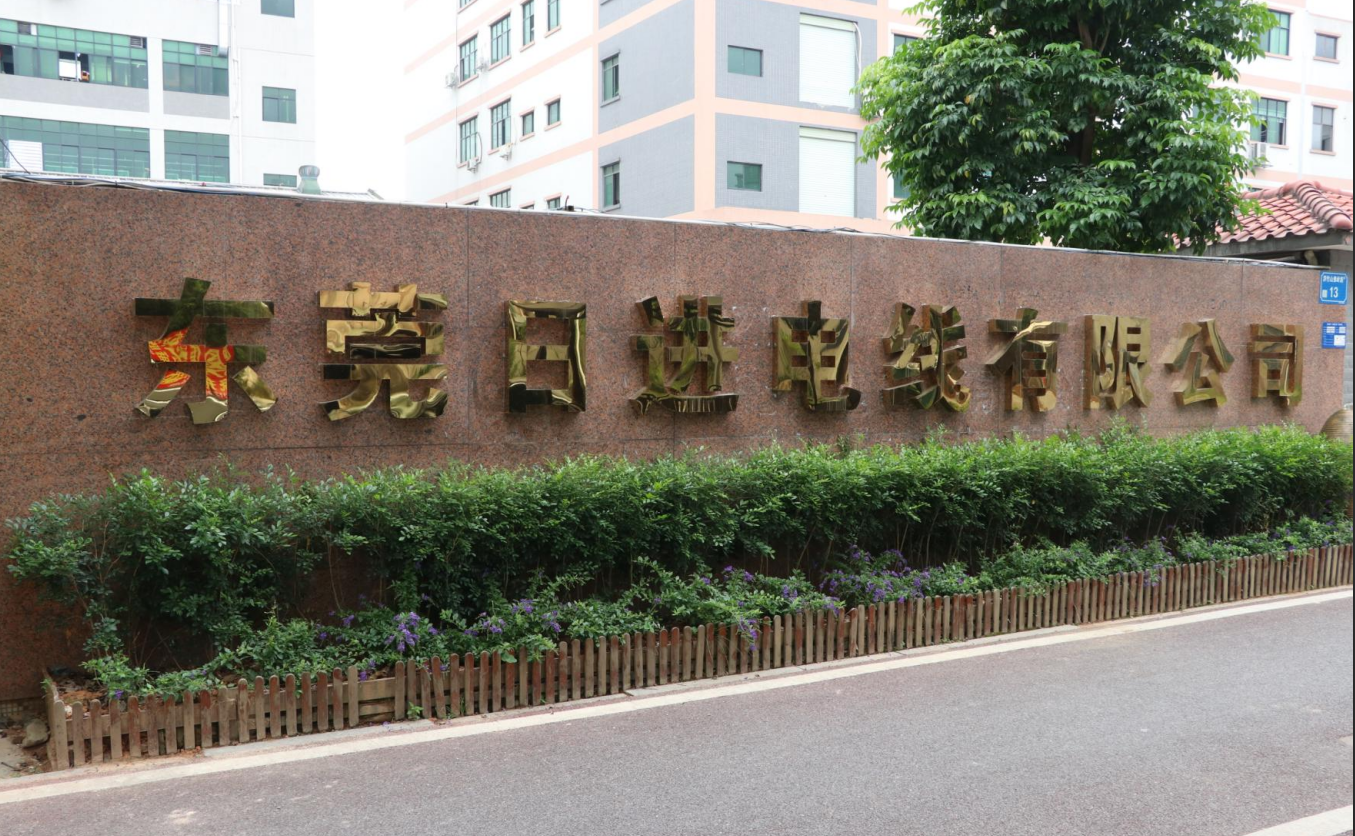
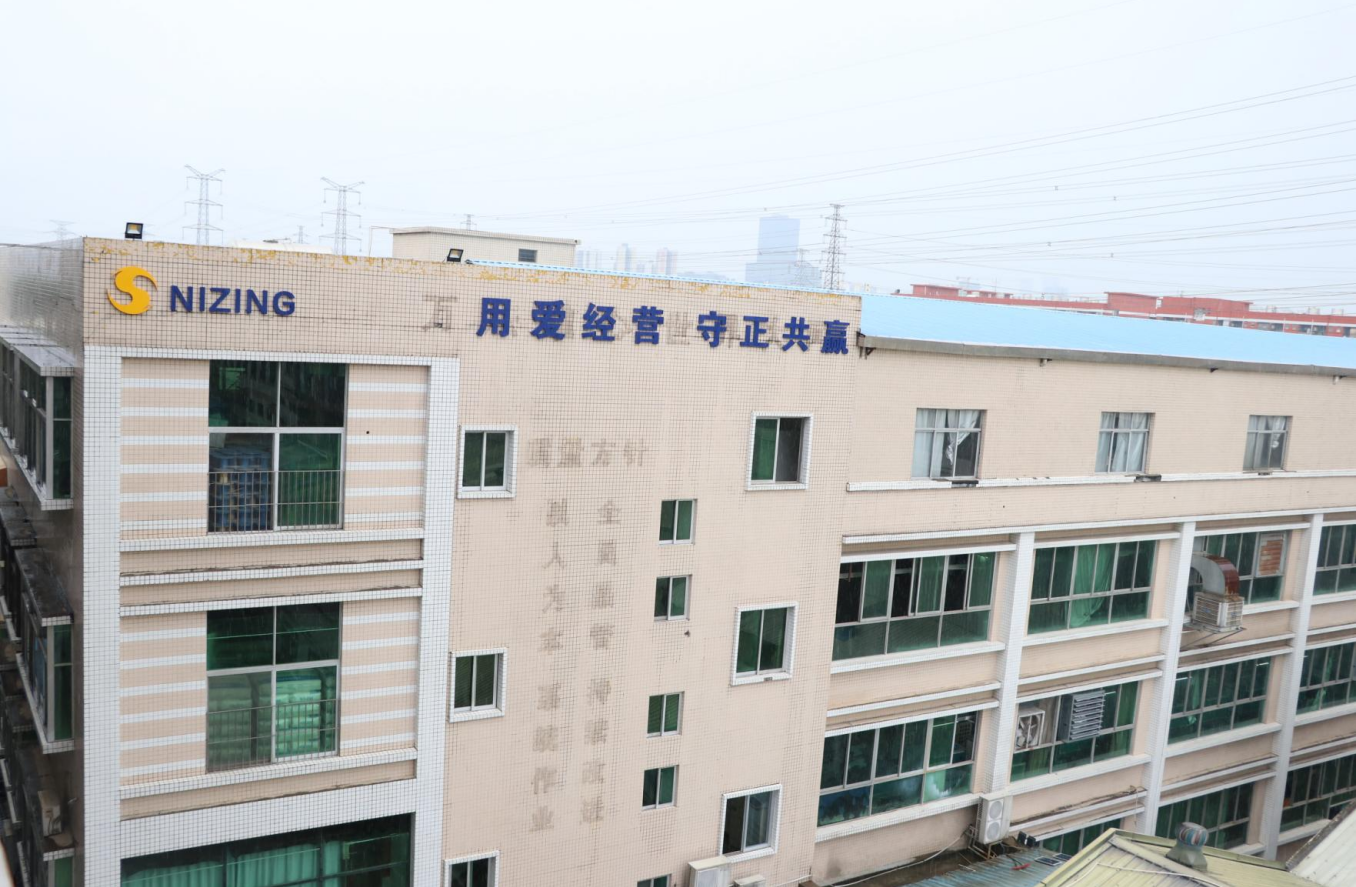
NIZING ELECTRIC CO., LTD is a wire and silicone manufacturer based in Dongguan, Guangdong Province, China, founded as part of Nizing Group in Taipei in 1983. The company produces high temperature silicone wire, silicone water pipe and Teflon wire, and also manufactures silicone raw materials, high temperature resistant braided silicone wire, food-grade silicone water pipes and silicone sealing rings. The site covers an area of 12 mu, employs 150 people and runs 20 engineers in R&D, with an annual output of 225,000,000 m; 30% of output is exported to Europe, America and Southeast Asia. The company holds 50 trademark records including NIZING and 63 patent records.
Because silicone compound is produced in-house rather than bought in, insulation performance and compound consistency are part of the same production chain as the finished wire. For a buyer working through a heat-related failure, that matters at the point where the specification has to be repeated across production batches.
Silicone braided wire: for moving runs and abrasion
A braided sleeve over silicone insulation adds mechanical protection to thermal protection. This is the construction to specify when the failed wire shows braid fraying, jacket wear or conductor exposure rather than cracking, typically where the run passes near a heat source and also vibrates.
Silicone double-insulated wire and Teflon double-insulated wire
Double insulation provides two polymer layers, which raises the isolation margin and slows heat transfer to the conductor. It is the practical answer to insulation flow at terminations, where a single wall softens under clamping pressure. The choice between a silicone and a Teflon outer layer follows the temperature class and the chemical environment, not brand preference.
Silicone parallel wire and Teflon parallel wire
Parallel constructions keep two conductors in a flat profile, which suits tight routing inside appliances, control boxes and lighting assemblies where round multi-core cable will not fit the channel. The same construction logic applies in both polymers; the polymer choice sets the temperature ceiling.
Silicone multi-core wire
Multi-core silicone cable carries several circuits in one jacket and is the dominant silicone construction in current market data, with a projected 46.0% share of the silicone cable market in 2026. It is the usual choice for control harnesses and battery management wiring, where several signal and power lines share one route through a hot zone.
CCC silicone wire: the China market route
For equipment built for the Chinese market, CCC (China Compulsory Certification) applies to high temperature resistant wires rated at or below 450/750 V, under the GB/T 5013 and GB/T 5023 framework. A CCC silicone wire is therefore a specification, not a marketing label: the standard and the voltage rating determine whether the certification route is required at all.
The rest of the thermal path: silicone water pipe, inner rubber outer fiber tube and LED strip silicone tube
Heat failures are rarely confined to the conductor. Silicone tube and seal components sitting in the same assembly degrade on the same thermal cycle, which is why an integrated fix often includes silicone water pipe, inner rubber outer fiber tube constructions, LED strip silicone tube and silicone sealing rings alongside the wire. Replacing the wire while leaving a hardened tube or a compressed seal in place produces a second failure shortly after the first repair.
Published operating data as a starting point: silicone rubber insulated wires such as SRML/SFF-2 are suitable for continuous operation at conductor temperatures up to 150 °C at 600 V. UL 3135 is a 200 °C silicone rubber insulated style used for internal wiring. High temperature Teflon (PTFE) wires typically operate from -60 °C to +260 °C. NIZING's published high temperature wire range extends from -100 °C to +750 °C for specific industrial heat treatment applications. These figures are starting points for a specification, not the specification itself.
Silicone or PTFE: A Comparison on Verifiable Attributes
The silicone versus Teflon decision is usually presented as a temperature contest. In practice the temperature ranges overlap enough that flexibility, abrasion and chemical exposure decide the outcome.
| Attribute | Silicone insulation | PTFE (Teflon) insulation |
|---|---|---|
| Typical continuous temperature | Up to 150 °C for SRML/SFF-2 style constructions at 600 V; 200 °C for UL 3135 style silicone wire | -60 °C to +260 °C typical range |
| Flexibility | High; suits tight bends, vibration and flexible harnesses | Stiffer; commonly specified for fixed routing |
| Abrasion in moving runs | Addressed by silicone braided wire with a braided sleeve | Mechanical protection usually specified separately |
| Chemical and medical use | Preferred in medical equipment for flexibility and chemical resistance | Selected where chemical exposure is the dominant constraint |
| Certification routes | UL 758 (AWM), UL 3135, IEC 60245 (e.g. H05SS-F), CCC for ≤450/750 V in China | UL 758 (AWM) covers fluoropolymer insulation; same CCC and IEC framework applies to finished cables |
| Where it removes the failure | Cracking, insulation flow, vibration-driven abrasion, high-flex harnesses | Highest sustained temperatures and aggressive chemical environments |
Neither column is universally better. Silicone is the more forgiving material in a moving, bending installation; PTFE is the more forgiving material when the ambient temperature or the chemical load sits above what silicone will accept. Specifying silicone in a 250 °C zone, or PTFE in a tight flexing harness, simply moves the failure rather than removing it.
From Failure Report to Released Specification: Eight Steps
The following sequence is what turns a repair into a fix. It is written for an engineer in the Evaluation to Execution stage, where the goal is a drawing that can be quoted and repeated.
- Capture the thermal profile. Record conductor temperature under real load and the ambient temperature around the run, and separate continuous operation from short excursions. A single spot reading at start-up is not a profile.
- Confirm the failure mechanism. Cracking points to thermal ageing; deformation at a lug points to insulation flow; fraying points to abrasion; discoloured copper points to oxidation. The mechanism determines the construction, not the other way round.
- Set the temperature class with margin. Choose a class above the measured continuous conductor temperature rather than equal to it. Overshooting the requirement by several classes adds cost without adding service life.
- Select the insulation family. Silicone where flexibility, bending and vibration dominate; PTFE where sustained high temperature or chemical exposure dominates. Use the comparison table above as the decision record.
- Select the construction. Single insulated for fixed internal runs, parallel for flat tight routing, multi-core for shared harness routes, braided for moving runs, double-insulated where termination pressure is the weak point.
- Fix the interfaces and the thermal path. Terminals, strain relief, sleeving and separation distances. Replace hardened silicone water pipe, tube and seal components in the same work order, otherwise the second failure is already scheduled.
- Lock the compliance route. Match the standard to the destination market: CCC for China at or below 450/750 V, UL 758 AWM for appliance wiring material, UL 3135 for 200 °C silicone styles, IEC 60245 including H05SS-F for rubber insulated cables. Put the standard and style on the drawing.
- Validate by sample, then freeze the drawing. Test the sample against the original failure mechanism, not against a generic checklist, and record the result as the incoming inspection baseline.
Applications Where This Workflow Changes Outcomes
Industrial heating and heat treatment equipment
Runs that live inside or beside a heated chamber need a temperature class set from the measured profile. Published NIZING ranges extend to +750 °C for specific industrial heat treatment applications, which places the construction decision well beyond standard silicone classes.
EV battery management systems
Silicone parallel wires and multi-core cables are increasingly used in EV battery management systems for high voltage and temperature stability. The failure mode here is usually insulation flow and vibration abrasion rather than simple overheating, which favours multi-core and braided constructions.
Home appliance internal wiring
Appliance internal wiring is governed by UL 758 AWM in the US market and equivalent standards elsewhere. Parallel and double-insulated constructions fit the tight internal channels, and the certification route decides which build can be shipped to which market.
LED strip lighting assemblies
LED assemblies combine a heat source, a flexible substrate and a tube. Degraded LED strip silicone tube and cracked conductor insulation appear together, so the repair should address both the wire and the tube rather than the wire alone.
Medical equipment
Silicone insulated cables are preferred in medical equipment because of superior flexibility and chemical resistance, which means the same material decision that solves a heat problem also serves cleanability and repeated flexing.
Fluid-adjacent and sealed assemblies
Where water pipe, seals and wiring share an enclosure, the thermal cycle acts on all three. Food-grade silicone water pipes and silicone sealing rings belong in the same replacement scope as the high temperature wire, particularly in appliances and process equipment.
| Construction | Primary failure mode addressed | Typical application | What to watch |
|---|---|---|---|
| Single insulated silicone wire | Thermal ageing and cracking | Fixed internal runs in appliances and panels | Needs separation from hot surfaces and mechanical protection |
| Silicone braided wire | Abrasion and vibration wear in hot zones | Moving runs, heated machinery | Braid ends must be terminated to avoid fraying |
| Silicone double-insulated wire | Insulation flow at terminations | Terminal blocks, connectors, sealed joints | Larger outer diameter changes routing space |
| Silicone parallel wire | Space-constrained flat routing | Lighting, appliances, control boxes | Lower mechanical resilience than round cable |
| Silicone multi-core wire | Multiple circuits through one hot route | Control harnesses, EV battery management | Core count and jacket thickness drive the diameter |
| Teflon double-insulated and parallel wire | Highest sustained temperature and chemical exposure | Heat treatment, chemical process equipment | Stiffer handling; less suited to repeated flexing |
FAQ
Which certifications should a high temperature resistant wire carry for industrial equipment?
The answer depends on the destination market, not on the wire alone. For the Chinese market, high temperature resistant wires rated at or below 450/750 V must obtain CCC certification under the GB/T 5013 and GB/T 5023 framework. UL 758 is the primary standard for Appliance Wiring Material and covers internal wiring using silicone and fluoropolymer insulation, while UL 3135 is a specific silicone rubber insulated style rated for 200 °C. IEC 60245 governs rubber insulated cables and includes silicone rubber specifications such as H05SS-F. A buyer should name the standard and the style in the RFQ, because the same silicone construction can be built to different standards.
Can an OEM high temperature resistant wire manufacturer supply silicone braided wire to my drawing?
Yes, once the construction is defined. Silicone braided wire combines a silicone-insulated core with a braided sleeve for mechanical and thermal protection. NIZING ELECTRIC CO., LTD manufactures high temperature resistant braided silicone wire in Dongguan, produces silicone raw materials in-house, and operates with 20 R&D engineers, 150 employees and an annual output of 225,000,000 m, with 30% of output exported to Europe, America and Southeast Asia. An OEM request should fix conductor, core count, insulation wall and temperature class, braid type and the target standard; the supplier then returns a drawing for approval before production.
What drives the cost of a high temperature silicone wire specification?
Construction complexity drives cost more than length alone. The main variables are conductor stranding, the volume of silicone compound used (double insulation consumes more), whether a braid is applied, the core count in multi-core assemblies, and the certification testing required for the target standard. Specifying a temperature class far above the measured application temperature adds cost without adding service life, which is why the thermal profile step carries commercial weight as well as technical weight.
How should a sample be validated before production?
Test the sample against the original failure mechanism rather than a generic checklist. That means running the real current to confirm conductor temperature, bending at the installed radius, checking abrasion behaviour where the run moves, and exposing the insulation to the oils, coolants or cleaning agents present on site. Comparing an aged sample side by side with the failed wire is the fastest way to confirm the construction actually addresses the cause. Record the result: it becomes the incoming inspection baseline for every later delivery.
What sequence and lead time should be planned for an OEM order?
The calendar is set by four gates, not by production alone: specification freeze, drawing approval, sample validation, and production scheduling. Planning backwards from the installation date across those four gates is more reliable than quoting a single delivery figure. To start the process, send the failure description, the measured temperature and voltage, and the target standard to sd032@nizing.com or WhatsApp +86 188-2061-9750, and request a sample and a quotation against your drawing. The full product range is documented in the downloadable brochure below.
Conclusion: Stop Replacing Wire, Start Specifying Insulation
A heat failure in industrial wiring is a specification gap, not a maintenance problem. The wire did what its datasheet allowed; the installation asked for something else. Once the mechanism is identified, the fix is a combination of insulation family, temperature class, construction and certification route, and it can be written into a drawing that any qualified supplier can quote and repeat.
Silicone constructions cover most of that ground: braided silicone for moving runs, double-insulated builds for termination pressure, parallel profiles for tight channels, multi-core for shared harness routes, and CCC silicone wire where the Chinese market requires it. Where the thermal path includes tubes and seals, silicone water pipe, inner rubber outer fiber tube components, LED strip silicone tube and silicone sealing rings belong in the same work order as the wire.
For buyers who want to move from a failure report to a released specification, NIZING ELECTRIC CO., LTD can review the application, propose a construction and supply samples for validation. Learn more at www.nizing-global.com.
Next Step: Sample, Quote or Catalogue
Send the failure description, temperature range, voltage and target standard. NIZING will respond with a proposed construction and a sample for validation.
Email: sd032@nizing.com | Tel / WhatsApp: +86 188-2061-9750
Address: Fuzhushan Village, Liaobu Town, Dongguan City, Guangdong Province, China
Download the NIZING Product Catalogue (PDF)
Have Questions or Need More Details?
Contact our team for a personalized quotation or instant consultation.
Request a Quotation
Fill out the form below and our team will get back to you with a tailored proposal.
WhatsApp Direct Chat
Prefer to chat in real-time? Message us on WhatsApp for instant assistance & quick answers.
- Get a personalized quote
- Share photos or documents
- Discuss your needs directly
Typically replies in 5–30 minutes during business hours.