
High Temperature Resistant Wire Solutions for Home Appliance Manufacturing: An Application Guide
High Temperature Resistant Wire Solutions for Home Appliance Manufacturing: An Application Guide
Wire rarely fails in a home appliance because the conductor was too thin. It fails because the insulation around it was specified for the wrong heat zone. A silicone lead that lasts for years inside a control box can harden and crack within months when the same lead is routed a few centimetres from a heating element — and that problem only becomes visible after the product is already in mass production.
This application guide is written for appliance design engineers, process engineers and OEM procurement teams moving a product from validation into volume production. It covers where heat attacks wiring inside appliances, which published insulation classes apply, which construction families — silicone braided wire, silicone double-insulated wire, Teflon double-insulated wire, silicone parallel wire, Teflon parallel wire and silicone multi-core wire — suit which zones, how certification routes differ by market, how to validate a sample against the real heat load, and what has to change when a first sample order becomes a long-term supply relationship.
Problem Definition: Where Heat Actually Attacks Appliance Wiring
Heat damage in appliance wiring usually begins as a material change rather than an electrical fault. Under sustained heat, an insulation compound can harden, lose elongation and shrink back from terminals; flexibility drops, so the wire resists the bends it has to make during assembly; micro-cracks then form where the wire is clamped, tied or folded. Once the insulation is compromised, the conductor is exposed to air, moisture and cleaning agents, and what started as a mechanical issue becomes a safety issue.
For specification purposes, two temperatures matter more than any other number: the continuous conductor temperature the wire will see in normal operation, and the short-term peak temperature it will see during a warm-up cycle, a fault condition or a self-clean program. Published insulation references are stated against those two figures:
- Silicone rubber insulated wires such as SRML / SFF-2 are suitable for continuous operation at conductor temperatures up to 150 °C at 600 V (Seattle City Light material standard 6420.65).
- UL 3135 is a specific style of silicone rubber insulated wire rated for 200 °C and used for internal wiring.
- High-temperature Teflon (PTFE) wires typically operate in the range of −60 °C to +260 °C (Grand View Research).
- Appliance Wiring Material (AWM) under UL 758 is the primary standard for appliance internal wiring using silicone and fluoropolymer insulation.
These are insulation-class numbers. They describe what the wire construction can tolerate, not what the appliance surface reaches — which is why a specification copied from another bill of materials is not a reliable starting point. The reliable starting point is a measurement taken at the wire route inside the assembled product.
A wire that runs continuously warm inside a compressor compartment and a wire that sees a brief peak next to a heating element are two different purchasing decisions, even when both are ordered under the same generic description of “high temperature resistant wire”.
Industry Background: A Growing Market That Must Be Read by Scope
Published market estimates for this category differ widely because the reports define scope differently: some count high temperature resistant wire only, some include complete high temperature cables, and others isolate silicone constructions. Buyers comparing figures should read the scope definition before quoting a number.
- Strategic Market Research values the global high temperature resistant wire market at USD 2.13 billion in 2024 and projects USD 3.19 billion by 2030 at a 6.8% CAGR.
- Market Research Future estimates the same category at USD 1.48 billion in 2024, with a projected CAGR of 4.5% to 2035.
- On a wider scope, the global high temperature cables market is estimated at USD 4.8 billion in 2024 and expected to reach USD 7.3 billion by 2030 (Strategic Market Research).
- The global silicone cable market was valued at approximately USD 3.87 billion in 2024 (SNS Insider), with the high temperature silicone cable segment at USD 1.34 billion in 2024 growing at an 8.95% CAGR towards 2032 (SNS Insider).
- The multi-core silicone cable segment is expected to account for 46.0% of global silicone cable market share in 2026 (Business Research Insights).
- Asia Pacific dominated the PTFE (Teflon) market in 2025 with a 50.5% value share (MarketsandMarkets); the global PTFE market is projected to reach USD 3.87 billion by 2031 from USD 3.12 billion in 2026 (MarketsandMarkets).
Two signals in that data matter directly to appliance manufacturing. First, the size of the multi-core silicone segment shows that buyers increasingly purchase finished multi-core assemblies rather than single leads. Second, the concentration of PTFE activity in Asia Pacific means fluoropolymer constructions for appliances are largely sourced from the same region where the appliances are assembled, which shifts the decisive question from geography to supplier qualification.
The Practical Solution Set: Constructions That Match Appliance Heat Zones
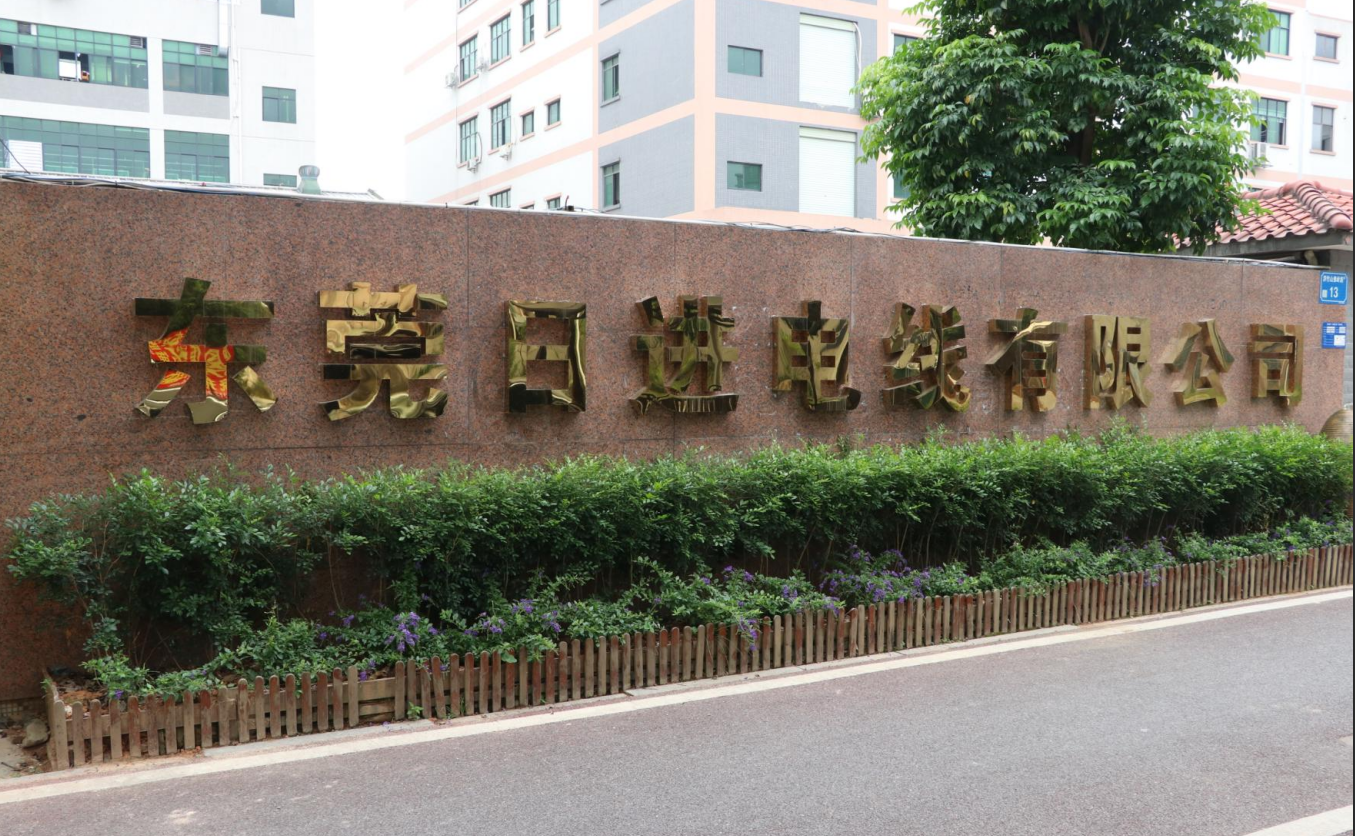
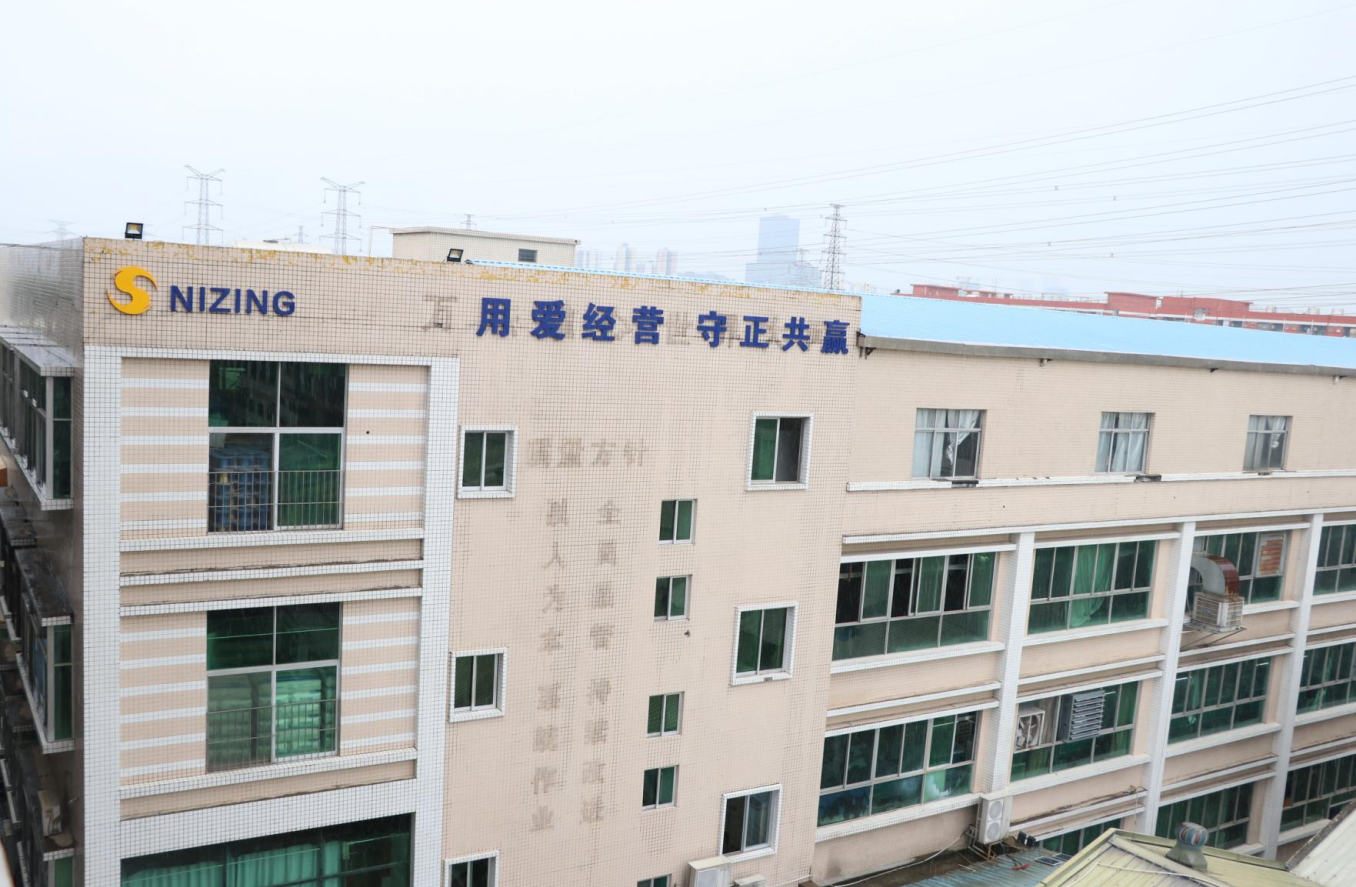
NIZING ELECTRIC CO., LTD. is a wire and silicone products manufacturer founded in 1983 and located at Fuzhushan Village, Liaobu Town, Dongguan City, Guangdong Province, China. Its main products are high temperature silicone wire, silicone water pipe and Teflon wire, produced alongside silicone raw materials, high temperature resistant braided silicone wire, food-grade silicone water pipe and silicone sealing rings.
The construction families most often specified in appliance builds, and the logic behind each, are as follows:
- Silicone braided wire — silicone insulation with a braided reinforcement layer, generally selected where heat is combined with abrasion or repeated movement during assembly.
- Silicone double-insulated wire — two insulation layers, chosen where reinforced electrical separation is required inside the product.
- Teflon double-insulated wire — a fluoropolymer system for the higher-temperature end of the appliance, applying the same double-layer logic.
- Silicone parallel wire and Teflon parallel wire — two conductors held in a flat profile, used where a fixed spacing between two leads simplifies routing and termination.
- Silicone multi-core wire — several cores in one construction, the segment Business Research Insights expects to hold 46.0% of global silicone cable market share in 2026.
- Related silicone components — silicone water pipe, inner rubber outer fiber tube, LED strip silicone tube and silicone sealing ring, for appliances where heat also affects water, steam or sealing paths.
In the Chinese market the same silicone family is frequently ordered under the term CCC silicone wire, because high temperature resistant wire rated at or below 450/750 V must obtain China Compulsory Certification (CCC) under GB/T 5013 or GB/T 5023.
For appliance producers, the deciding question is not whether a supplier lists every construction, but whether the same construction can be reproduced to the same drawing across repeated runs. NIZING ELECTRIC CO., LTD. operates a site covering an area of 12 mu with 150 employees and an R&D team of 20 engineers, and reports an annual output of 225,000,000 meters across the NIZING high temperature wire range. The company exports to Europe, America and Southeast Asia, where export business accounts for 30% of total sales, and holds 63 pieces of patent information together with registered trademarks including “NIZING” and a registered capital of 9.5 million Hong Kong dollars.
Step-by-Step: From Heat Map to Repeatable Supply
- Map the heat zones on the assembled product. Record the temperature at the wire route — not at the component — with the appliance running its worst-case cycle, and note steady-state and peak values separately.
- Convert the measurement into a specification requirement. State the continuous conductor temperature and the peak value independently, and require the wire’s published class to cover both.
- Choose the construction family. Silicone constructions suit flexible, moderately heated routes; fluoropolymer (Teflon) constructions suit the higher temperature ceiling; braided or double-insulated versions add abrasion resistance or reinforced separation; parallel and multi-core versions answer routing and assembly-time constraints.
- Fix the electrical and mechanical parameters. Define conductor size, core count, voltage class, colour code, reel or box format, strip length and the tightest bend radius the line will use.
- Confirm the approval route for each destination market. United States: AWM under UL 758. International and European practice: IEC 60245 for rubber insulated cables, including silicone rubber types such as H05SS-F. China: CCC for wire rated at or below 450/750 V.
- Validate with samples in the real heat zone. Run thermal cycling, bend the sample at the tightest production radius, inspect the insulation for hardening, cracking or shrinkage, and confirm connector retention and dimensional fit.
- Freeze the specification and qualify the supplier. Convert the validated sample into a controlled drawing, agree a change-notification rule, and plan repeat volumes against the supplier’s actual capacity.
Use Cases: Five Zones in Appliance Manufacturing
Cooking and heating appliances
The route closest to the heating element is where insulation classes separate. Silicone rubber insulated styles are published for continuous conductor temperatures up to 150 °C at 600 V, and UL 3135 silicone styles for 200 °C, while PTFE constructions are typically specified from −60 °C to +260 °C. Where the peak is brief, the decision usually comes down to how much flexibility the assembly still needs at its bend points.
Motor and compressor compartments
These zones combine moderate continuous heat with vibration and repeated movement. Flexibility and abrasion behaviour become the deciding factors, which is where braided and double-insulated silicone constructions are typically considered.
Power boards and control modules
Internal wiring inside appliance control assemblies is normally qualified as Appliance Wiring Material under UL 758. Because these wires are cut to length and terminated in volume, reel format, strip quality and dimensional repeatability matter as much as the temperature class.
Display and LED modules
Alongside silicone wire and silicone parallel wire, LED strip silicone tube is used to protect light strips in appliance displays and illumination. The tube and the wire sit under the same heat source, so they are best qualified together rather than separately.
Steam, water and sealing paths
Appliances that handle hot water or steam apply heat to silicone components as well as to wire. Food-grade silicone water pipe, inner rubber outer fiber tube and silicone sealing ring belong to the same heat-zone discussion as the wiring, which is why sourcing them from one production base reduces the number of incoming specifications to control.
Comparison Table: Insulation and Construction Reference
| Construction / material | Published temperature reference | Standard or source | Appliance decision driver |
|---|---|---|---|
| Silicone rubber (SRML / SFF-2 type) | Continuous conductor temperature up to 150 °C at 600 V | Seattle City Light material standard 6420.65 | Flexible internal routes with moderate continuous heat |
| Silicone rubber (UL 3135 style) | 200 °C rated | UL style reference | Higher-temperature internal wiring where silicone flexibility is still required |
| PTFE (Teflon) | Typically −60 °C to +260 °C | Grand View Research | Highest-temperature routes and chemically aggressive environments |
| Appliance Wiring Material (AWM) framework | Covers silicone and fluoropolymer internal wiring | UL 758 | Approval route for US-market appliance wiring |
| Rubber insulated cable framework | Includes silicone rubber types such as H05SS-F | IEC 60245 | International and European appliance wiring |
| China market wire rated ≤450/750 V | Requires CCC (GB/T 5013, GB/T 5023) | China Compulsory Certification | Domestic China production and sale |
The values above are published references for an insulation class or a regulatory framework, not specifications of any individual product. Final selection depends on the measured temperature at the wire route inside the assembled appliance.
From First Sample to Long-Term Supply
For a buyer in the decision stage, the difference between a wire that works and a wire that keeps working is the supply relationship behind it. Four items decide whether the second, tenth and fiftieth production runs behave like the first:
- Specification freeze. The construction drawing should name the insulation system, braid, core count, conductor size, colour code and reel format, so that a repeat order never has to be re-interpreted.
- Documented change control. Any change to a material batch or a process step should be notified before it reaches a shipment, because the appliance approval file is tied to the qualified construction.
- Capacity matched to the ramp. A supplier’s production base determines how quickly a pilot order can become a volume order. NIZING ELECTRIC CO., LTD. reports an annual output of 225,000,000 meters, with 150 employees, a 12 mu site and 20 engineers in R&D.
- Regional coverage. The company exports to Europe, America and Southeast Asia, where export business accounts for 30% of total sales — markets whose approval routes (UL 758, IEC 60245, CCC) are among those most frequently required in appliance projects.
Long-term supply also means accepting trade-offs instead of optimising a single figure. A higher temperature ceiling is not automatically better: fluoropolymer insulations behave differently from silicone at the bend radius and must be handled accordingly on the line. Braided and multi-core constructions add processing steps but reduce assembly time. The right answer is the construction that covers the heat zone with the fewest extra process steps — which is usually the construction the line can run consistently for years.
FAQ: High Temperature Resistant Wire in Appliance Manufacturing
1. What certification does high temperature resistant wire for home appliances need?
It depends on the destination market and the voltage class. Internal wiring for appliances sold in the United States is commonly qualified as Appliance Wiring Material under UL 758, the primary AWM standard covering internal wiring with silicone and fluoropolymer insulation. Rubber insulated cables, including silicone rubber types such as H05SS-F, fall under IEC 60245 in international and European practice. For the Chinese market, insulated wire rated at or below 450/750 V must obtain CCC (China Compulsory Certification) under GB/T 5013 or GB/T 5023. Appliance makers should therefore fix the destination market before freezing the wire specification, because the same construction can require a different approval file per region.
2. Can one supplier cover both the wire and the silicone parts around a heat zone?
It can when the supplier’s range spans both categories. NIZING ELECTRIC CO., LTD., founded in 1983 and based in Dongguan, Guangdong Province, China, produces high temperature silicone wire and Teflon wire alongside silicone water pipe, food-grade silicone water pipe, inner rubber outer fiber tube, LED strip silicone tube and silicone sealing rings. The company reports an R&D team of 20 engineers and an annual output of 225,000,000 meters. For appliance builders, sourcing wire and related silicone components from one production base reduces the number of incoming specifications to qualify and simplifies change management during a product revision.
3. What drives the cost of high temperature resistant wire in appliance builds?
Cost is driven mainly by the material system and the construction, not by the temperature rating alone. Fluoropolymer (Teflon) and silicone are different material systems, so their cost profiles differ; adding a braided layer, a second insulation layer or a multi-core assembly increases the number of processing steps; conductor size and core count scale the metal content. Because parallel and multi-core constructions combine several conductors into one part, they can reduce total assembly time even when the unit price of the wire is higher. Buyers should therefore compare cost per finished harness rather than price per metre alone.
4. How should appliance makers validate a sample before mass production?
Validate the wire in the zone it will actually run. A workable sequence is: (1) record the measured temperature at the wire route in the assembled product, both continuous and peak; (2) confirm that the sample’s published conductor temperature class covers that measurement; (3) run thermal cycling and check the insulation for hardening, cracking or shrinkage; (4) bend the sample at the tightest radius used on the line; (5) check connector retention and dimensional fit; (6) cut and inspect the construction to confirm that layers, braiding and core count match the drawing. NIZING ELECTRIC CO., LTD. supplies high temperature silicone wire, Teflon wire, silicone water pipe and silicone sealing rings, and sample requests can be sent to sd032@nizing.com.
5. What has to be fixed before repeat production orders are placed?
Before repeat orders, appliance buyers and wire suppliers should freeze four things: the construction drawing (insulation system, braid, core count, conductor size and colour code); the approval file for each destination market; the packing and reel format used on the assembly line; and the change-notification rule that applies if a material or process is altered. Volume planning should then be checked against supplier capacity — NIZING ELECTRIC CO., LTD. operates with an annual output of 225,000,000 meters and exports to Europe, America and Southeast Asia, where export business accounts for 30% of total sales. Locking these four items before ramp-up avoids a re-qualification cycle later in the product’s life. To start a qualification, contact the team at sd032@nizing.com, by phone or WhatsApp at +86 188-2061-9750, or through www.nizing-global.com.
Conclusion
Home appliance manufacturing rewards a specification process rather than a material preference. Measure the heat zone at the wire route, state continuous and peak temperatures separately, choose the construction family that satisfies both, confirm the approval route for every destination market, validate the sample at the tightest bend and the real heat load, then freeze the drawing before ramp-up. Wire specified this way keeps working beyond the warranty period, and the supply relationship that produced it stays predictable as volumes grow.
Need a high temperature resistant wire sample for your appliance heat zone?
Send the measured temperature, voltage class, core count and bend radius, and NIZING ELECTRIC CO., LTD. will match them against its silicone and Teflon wire range.
Email: sd032@nizing.com · Phone / WhatsApp: +86 188-2061-9750 · Website: www.nizing-global.com
Address: Fuzhushan Village, Liaobu Town, Dongguan City, Guangdong Province, China
Download the product catalogue: NIZING product catalogue (PDF)
Have Questions or Need More Details?
Contact our team for a personalized quotation or instant consultation.
Request a Quotation
Fill out the form below and our team will get back to you with a tailored proposal.
WhatsApp Direct Chat
Prefer to chat in real-time? Message us on WhatsApp for instant assistance & quick answers.
- Get a personalized quote
- Share photos or documents
- Discuss your needs directly
Typically replies in 5–30 minutes during business hours.