
High Temperature Resistant Wire: Standard vs. Braided Silicone — A Head-to-Head Decision Guide
Standard vs. Braided Construction
Standard silicone high temperature resistant wire and braided silicone wire share the same conductor and the same silicone insulation. The difference is a woven glass-fibre braid laid over the insulation. Specify the standard construction when the wire is fixed, mechanically protected and cost-sensitive; specify the braided construction when the route abrades, pinches, cuts or moves, because in those routes the braid — not the temperature rating — decides whether the wire survives.
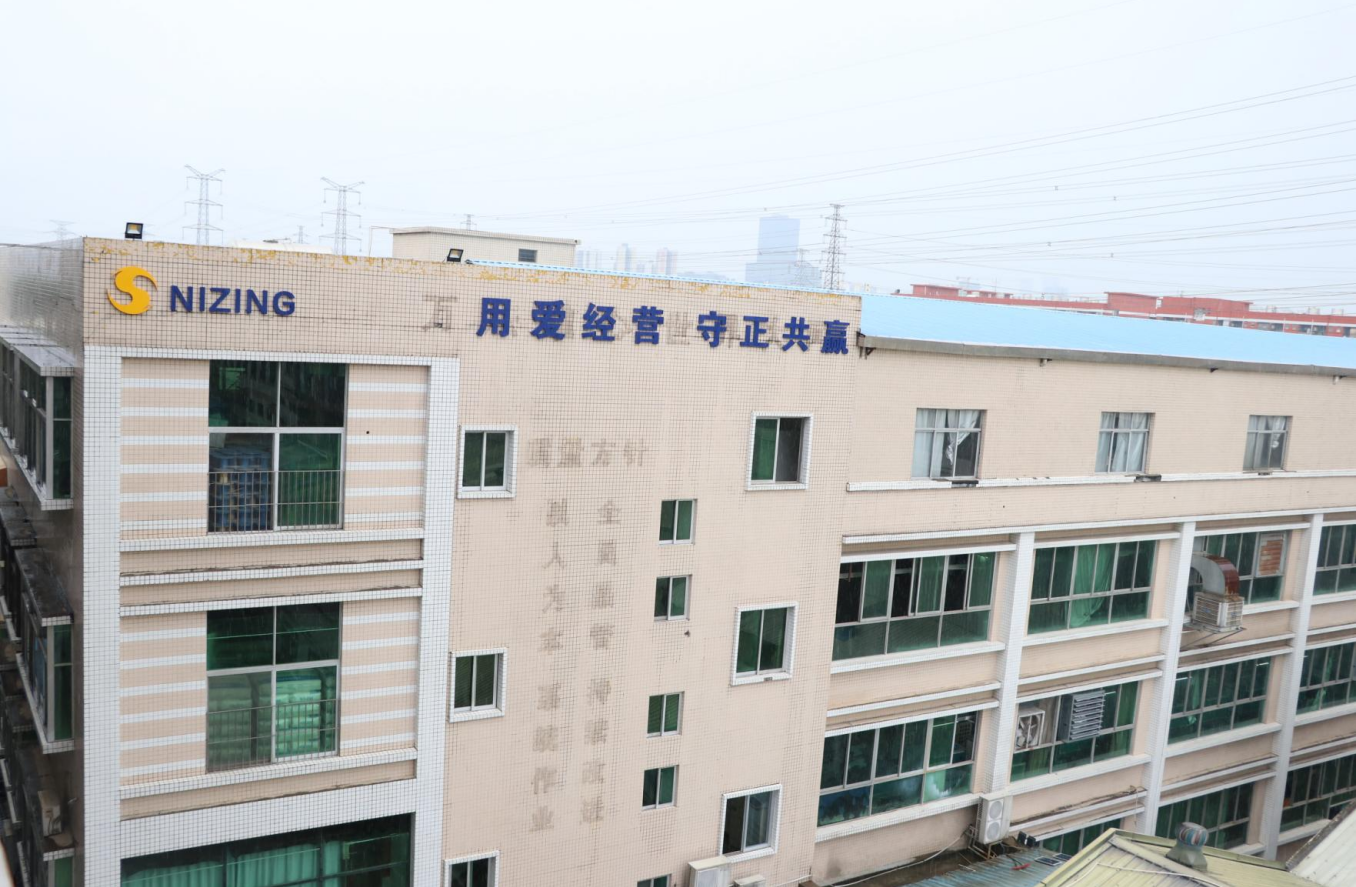
NIZING production site in Dongguan, Guangdong, where standard silicone wire and high temperature resistant woven silicone gel wire are manufactured.
This guide compares the two constructions head-to-head on abrasion resistance, flexibility, installation environment, certification route and cost. It then sets out a step-by-step method for deciding which construction belongs on the drawing, and for evaluating flex life before a purchase order is raised.
NIZING ELECTRIC CO., LTD is a wire and cable manufacturer founded in 1983 and based in Fuzhushan Village, Liaobu Town, Dongguan City, Guangdong Province, China. NIZING produces high temperature silicone wire, high temperature resistant woven silicone gel wire, Teflon wire, food-grade silicone water pipe and silicone sealing rings. Because its catalogue contains both constructions compared here, the NIZING high temperature wire range is used as the reference throughout.
Why the standard-versus-braided decision is harder than it looks
High temperature resistant wire failures are often mechanical rather than thermal. A silicone-insulated wire can hold its rated conductor temperature inside a controlled cabinet and still fail outside it, because the failure mode is a nick from a sheet-metal edge, a rub against a vibrating bracket or a pinch at a cable gland. Silicone rubber is chosen for heat resistance and flexibility. It is not a hard material, and it does not resist abrasion or cut-through the way a woven braid does.
That leaves a specification problem without a default answer. Temperature and voltage give buyers a clean number to compare. Mechanical exposure does not. Two quotes for what looks like the same product can differ by one braid layer, and the datasheet may reveal that difference only in the outer diameter and the price.
The risk runs in both directions. Over-specifying braid on every route adds material and processing cost, and can force a larger bend radius than the assembly allows. Under-specifying it moves the failure from the bench test to the field, where the cost appears as rework, service calls and warranty exposure instead of a few metres of wire.
Industry background: construction choice is now a procurement topic
The category this decision sits in is large and still expanding, although published estimates describe it at different scopes. Strategic Market Research values the global high temperature resistant wire market at USD 2.13 billion in 2024 and projects USD 3.19 billion by 2030 at a 6.8% CAGR. Market Research Future estimates USD 1.48 billion in 2024 at a 4.5% CAGR to 2035. Strategic Market Research separately sizes the broader high temperature cables market at USD 4.8 billion in 2024, rising to USD 7.3 billion by 2030. The spread reflects scope — wire alone versus wire and cable assemblies — rather than contradiction, and any market figure should be read together with the definition behind it.
Silicone is the material behind much of that volume. SNS Insider valued the global silicone cable market at approximately USD 3.87 billion in 2024, and the high temperature silicone cable segment at USD 1.34 billion in 2024 with a CAGR of 8.95% towards 2032. Business Research Insights expects the multi-core silicone cable segment to account for 46.0% of global silicone cable market share in 2026.
Two application trends push specifications toward mechanical protection. Silicone insulated cables are preferred in medical equipment for flexibility and chemical resistance. Silicone parallel wires and multi-core cables are increasingly used in EV battery management systems where high voltage and temperature stability matter. Both environments combine heat with movement, cleaning or vibration — the combination in which braid moves from optional to necessary.
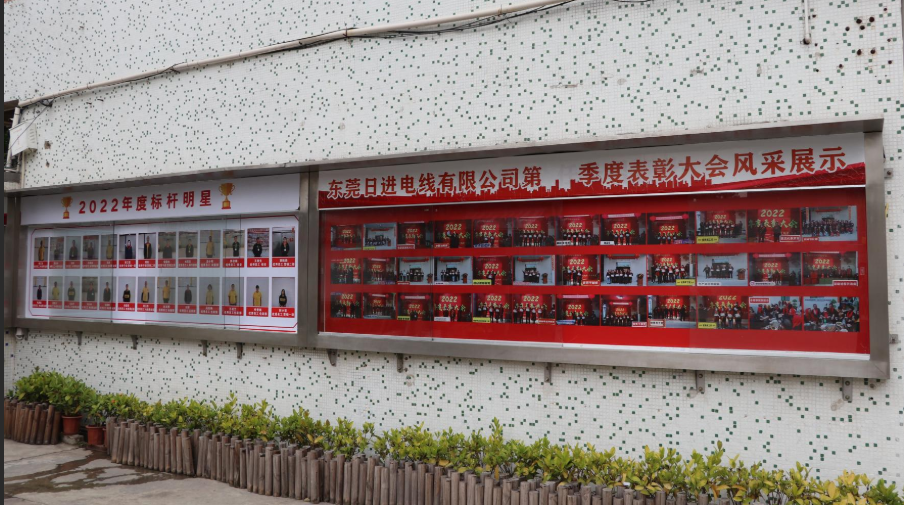
Recognition displayed at NIZING. Standard and braided silicone wires follow the same style-based qualification route.
What each construction actually is
Standard silicone high temperature resistant wire
A copper conductor covered by silicone rubber insulation, supplied as single-core wire or as multi-core assemblies. Within the same family buyers will meet silicone double-insulated wire, silicone parallel wire with two cores running side by side, and silicone multi-core wire. The temperature rating comes from the insulation and the style it is qualified to, not from the conductor. Silicone rubber insulated wires in the SRML/SFF-2 family are suitable for continuous operation at conductor temperatures up to 150 °C and 600 V. UL 3135 is a silicone rubber insulated style rated 200 °C for internal wiring. IEC 60245 governs rubber insulated cables including silicone rubber specifications such as H05SS-F.
Braided silicone wire
The same conductor and silicone insulation, with a woven glass-fibre braid applied over the insulation. NIZING lists this construction as high temperature resistant woven silicone gel wire, and the wider product family includes braided fibreglass sleeves used for thermal protection in home appliances and automotive applications. The braid carries no current. It is a mechanical and thermal layer, and because it sits outside the insulation it changes abrasion resistance, cut-through resistance, outer diameter, surface friction and flexibility without altering the electrical function of the wire.
Abrasion and cut-through
This is the decisive difference. Silicone insulation is soft and can be scored by a sharp edge during pulling, or worn through by sustained rubbing against a frame, a fan housing or a moving bracket. A woven braid takes that wear on its outer surface and spreads a point load over a wider area. In routes where the wire crosses a burr, passes through a tight gland or rests against a vibrating panel, the braid removes the dominant failure mode. In a route that is clipped, sleeved and never touched again, it removes very little.
Flexibility, space and termination
Braid adds diameter and surface friction, and it stiffens the wire. That matters in three places: minimum bend radius inside a compact housing, routing through narrow conduits, and stripping during termination. A braided wire usually needs a longer strip length and a defined termination method so the braid is cut cleanly and does not fray into the terminal. Standard silicone wire stays the more flexible option and the easier one to dress into tight assemblies.
Temperature rating and the braid
The braid does not raise the conductor temperature rating; it protects the insulation that carries it. NIZING's published high temperature wire range extends to specific constructions rated from -100 °C to +750 °C for industrial heat treatment applications. That figure belongs to particular constructions, not to every silicone wire, and the rating of the exact construction quoted should be confirmed in writing — including whether the braid and the termination system are covered by the same rating.
Cost logic
Braid adds material and an additional manufacturing step, so silicone braided wire generally carries a higher unit price than the standard construction. Whether that premium is justified depends on what the route does to the wire. Where field replacement is expensive, where downtime is measured in production hours, or where the wire feeds a safety-related circuit, the premium is usually the cheaper option. Where the wire is static, sleeved and protected, the standard construction delivers the same electrical performance at lower cost.
Step-by-step: choosing the right construction
- Fix the thermal duty first. Record the maximum conductor temperature, the ambient temperature around the route and the duty cycle. Compare that against the style rating — 150 °C at 600 V for SRML/SFF-2 family constructions, or 200 °C for a UL 3135 silicone style — and confirm the braided variant is qualified to the same figure before assuming it is.
- Map every mechanical exposure. Walk the route and mark each point where the wire touches metal, crosses a burr, passes a gland, bends around a bracket or sits in airflow that carries vibration. Any point where relative movement exists is a braid candidate. A route with none of these points rarely needs one.
- Set the bend radius and space allowance. Braid increases diameter and stiffness. If the assembly has a fixed envelope, check that the braided part still fits and still bends to the required radius. If it does not, the standard construction may be the only option that assembles, and mechanical protection has to come from a sleeve or a conduit instead.
- Confirm the standards route. Match the wire style to the standard the end product is certified against. UL 758 is the primary standard for Appliance Wiring Material, covering internal appliance wiring with silicone and fluoropolymer insulation. IEC 60245 covers rubber insulated cables including silicone rubber types such as H05SS-F. For the Chinese market, high temperature resistant wires rated at 450/750 V or below must obtain CCC certification under GB/T 5013 / GB/T 5023. Confirm the file or certificate covers the braided variant, not only the plain silicone version.
- Write down how flex life will be judged. Flex life is not a datasheet value that can be compared across suppliers; it is a result that depends on bend radius, travel, speed, load and termination. Fix a test protocol before sampling: bend radius, number of cycles, fixture, pass criterion such as insulation resistance or continuity, and whether the test runs at temperature. Testing standard and braided samples under the same protocol is the only honest comparison.
- Compare total installed cost. Add the wire price, the termination time, the sleeving that the standard construction may need to match braid protection, the expected replacement interval and the cost of a field failure. A higher unit price on a braided part is frequently the lower installed cost on an abrasion-exposed route.
- Lock the drawing and qualify with samples. Once the construction is chosen, put it on the drawing in words the supplier can quote against — conductor, insulation, braid, diameter, colour, rating, standard and termination. Then request samples of both constructions and run the flex or abrasion test before releasing volume.
NIZING office. Construction reviews, specification checks and sample requests are handled by the company's engineering and sales teams.
Use cases: where each construction wins
Home appliance internal wiring
Appliances combine heat, vibration and thin sheet-metal edges. Where the harness rests against a cabinet wall or passes close to a moving part, the braided construction absorbs the wear. Where the wire is fixed inside a protected channel, standard silicone wire covers the thermal requirement with easier routing. NIZING produces both silicone wire and braided fibreglass sleeves for thermal protection in home appliances and automotive sectors, so the two can be combined inside a single assembly.
Industrial heating and heat treatment equipment
Heat treatment and industrial heating equipment is where the upper end of the temperature range matters. NIZING's published range extends to specific constructions rated from -100 °C to +750 °C for industrial heat treatment applications. In these builds the thermal requirement dominates, but the route to the element often passes a hot, sharp frame — which is where braid earns its place, protecting the insulation so the insulation can do its thermal job.
EV battery management and power assemblies
Silicone parallel wires and multi-core cables are increasingly used in EV battery management systems for high voltage and temperature stability. Battery packs combine tight packaging, vibration and a service environment in which a chafed wire is a safety issue rather than a nuisance, so abrasion-resistant constructions are specified where the harness runs close to module edges.
Medical equipment
Silicone insulated cables are preferred in medical equipment for flexibility and chemical resistance. In this segment flexibility usually outranks abrasion resistance, because the wire moves with a patient-positioned arm or a handheld probe and must stay soft; a braid would stiffen it. The standard construction is normally the right default, with protection handled by the cable jacket or the mechanical design.
Lighting and LED assemblies
Lighting assemblies place wire close to a heat source and often inside a narrow profile. Standard silicone wire handles the thermal load and the tight bend. Braid is added where the wire leaves the fixture and runs through a metal housing or an exposed route where abrasion is possible.
Panel and cabinet wiring
Inside a cabinet the wire is fixed, supported and rarely disturbed, which is standard-construction territory. The exception is a cabinet door that swings: every hinge cycle flexes the wire, and a braided construction is specified where that movement continues over the life of the machine.
Comparison table: standard vs. braided silicone high temperature resistant wire
| Decision factor | Standard silicone high temperature resistant wire | Braided silicone wire |
|---|---|---|
| Construction | Copper conductor with silicone rubber insulation; single-core, double-insulated, parallel and multi-core versions | Same conductor and silicone insulation with a woven glass-fibre braid over the insulation |
| Function of the outer layer | The insulation provides dielectric strength and heat resistance | The braid adds mechanical and thermal protection; it carries no current |
| Abrasion and cut-through | Soft surface; vulnerable to burrs, rubbing and gland pinch | Wear is taken by the braid and point loads are spread over a wider area |
| Flexibility and bend radius | Higher flexibility, tighter bend radius, easier dressing | Stiffer, larger diameter, larger minimum bend radius |
| Termination | Straightforward strip and crimp | Needs a defined strip length and method so the braid is cut cleanly and does not fray |
| Temperature basis | Set by the style: SRML/SFF-2 family constructions suit continuous operation up to 150 °C at 600 V; UL 3135 silicone styles are rated 200 °C | The braid does not raise the conductor rating; it protects the insulation that carries it. Confirm the rating of the braided construction itself |
| Standards route | UL 758 (AWM), IEC 60245 including H05SS-F; CCC (GB/T 5013 / GB/T 5023) required in China at 450/750 V and below | Same route; confirm the braided variant is covered by the file or certificate |
| Best-fit installation | Fixed, sleeved, protected routes; tight envelopes; high-flexibility assemblies | Abrasion, cut-through, vibration, moving brackets, sharp edges, serviceable routes |
| Relative unit cost | Lower — one insulation layer, fewer process steps | Higher — braid material plus an additional braiding step |
| NIZING catalogue | High temperature silicone wire | High temperature resistant woven silicone gel wire; braided fibreglass sleeves also available for thermal protection |
Frequently asked questions
Do standard and braided silicone wires need different certifications?
The braid is a mechanical layer, but qualification follows the wire style, insulation and rated temperature and voltage, so the certification route is typically the same. UL 758 is the primary standard for Appliance Wiring Material and covers internal appliance wiring with silicone and fluoropolymer insulation. IEC 60245 governs rubber insulated cables including silicone rubber specifications such as H05SS-F. In China, high temperature resistant wires rated at 450/750 V or below must obtain CCC certification under GB/T 5013 / GB/T 5023. NIZING products are certified by international bodies including UL, cUL, CSA, PSE, VDE and CCC. The practical step is to confirm that the braided variant is covered by the same file or certificate as the plain silicone version, rather than assuming it.
Can one manufacturer supply both constructions for the same assembly?
Yes, and using one source reduces the risk of mismatched ratings inside a single harness. NIZING was founded in 1983, employs 150 people at a plant covering an area of 12 mu, and produces high temperature silicone wire, high temperature resistant woven silicone gel wire, Teflon wire, food-grade silicone water pipe and silicone sealing rings. Annual output is 225,000,000 m, the R&D team is made up of 20 engineers, and 30% of output is exported to Europe, America and Southeast Asia.
Why does braided silicone wire cost more, and when is the premium justified?
Braid adds material and an additional manufacturing step, and it increases diameter, so the unit price is generally higher than for the standard construction. The premium is justified when the route creates abrasion, cut-through, vibration or repeated movement, when replacement requires disassembling the equipment, or when the wire feeds a safety-related circuit. It is hard to justify when the wire is fixed, sleeved and protected. The comparison should be total installed cost — wire price plus termination time plus sleeving plus expected replacement interval — not unit price alone.
Does braided construction change lead time?
Braided wire requires an extra production step, and braid specifications, colour or finish requirements are usually scheduled separately from plain silicone wire, so lead time is generally longer than for the standard construction. Certification documentation for a new style also takes time. Buyers shorten the cycle by issuing the drawing with conductor, insulation, braid, diameter, rating and standard defined, together with quantity and required date, and by confirming which parts are catalogue items.
Can buyers validate both constructions before committing to a volume order?
Yes. Flex life and abrasion resistance are not datasheet values that can be compared across suppliers, so they should be tested. Request samples of the standard and braided constructions in the same conductor size, run both through the same fixture with the same bend radius and cycle count, and compare insulation resistance, continuity, outer diameter and strip-ability afterwards. NIZING supplies samples for evaluation. Buyers can send the drawing, target temperature, voltage and test protocol to the team at sd032@nizing.com or by WhatsApp on +86 188-2061-9750, and download the product brochure before the first technical call.
Conclusion
Standard silicone high temperature resistant wire and braided silicone wire are not competing products so much as two answers to two different questions. The standard construction answers a thermal question at the lowest cost and the highest flexibility. The braided construction answers a mechanical question — abrasion, cut-through, vibration, movement — and protects the insulation that provides the temperature rating.
The decision rule is simple enough to apply on the drawing. If the route is fixed, sleeved and protected, specify standard silicone wire and spend the saved cost on better routing. If the route abrades, moves or passes a sharp edge, specify the braided construction and confirm that its rating, certification and termination method are defined. In both cases, test before the purchase order rather than after the first field failure.
Request matched samples of both constructions
Send your drawing, conductor size, target temperature and flex test protocol, and NIZING will quote the standard silicone and the braided silicone version side by side.
Email: sd032@nizing.com · Tel / WhatsApp: +86 188-2061-9750
NIZING ELECTRIC CO., LTD, Fuzhushan Village, Liaobu Town, Dongguan City, Guangdong Province, China · www.nizing-global.com
Product brochure: download the NIZING wire and cable catalogue (PDF)
Contact NIZING for matched samples of standard silicone wire and braided silicone wire in the same conductor size.
Have Questions or Need More Details?
Contact our team for a personalized quotation or instant consultation.
Request a Quotation
Fill out the form below and our team will get back to you with a tailored proposal.
WhatsApp Direct Chat
Prefer to chat in real-time? Message us on WhatsApp for instant assistance & quick answers.
- Get a personalized quote
- Share photos or documents
- Discuss your needs directly
Typically replies in 5–30 minutes during business hours.