
From Silicone Compound to Finished Cable: How High Temperature Resistant Wire Is Made
Manufacturing Explainer
A high temperature resistant wire is a cable whose insulation system keeps working where ordinary PVC insulation would soften, discolour or fail. Most of the category rests on two material families, silicone rubber and fluoropolymer (commercially Teflon), and almost every product name a buyer meets is a different way of forming those materials around a conductor.
The journey from raw silica gel to a wound spool explains why two suppliers can quote on the same drawing and still deliver wire that behaves differently. Compound control, extrusion, curing, braiding and construction each add a decision point, and each one is visible to a buyer who knows where to look.
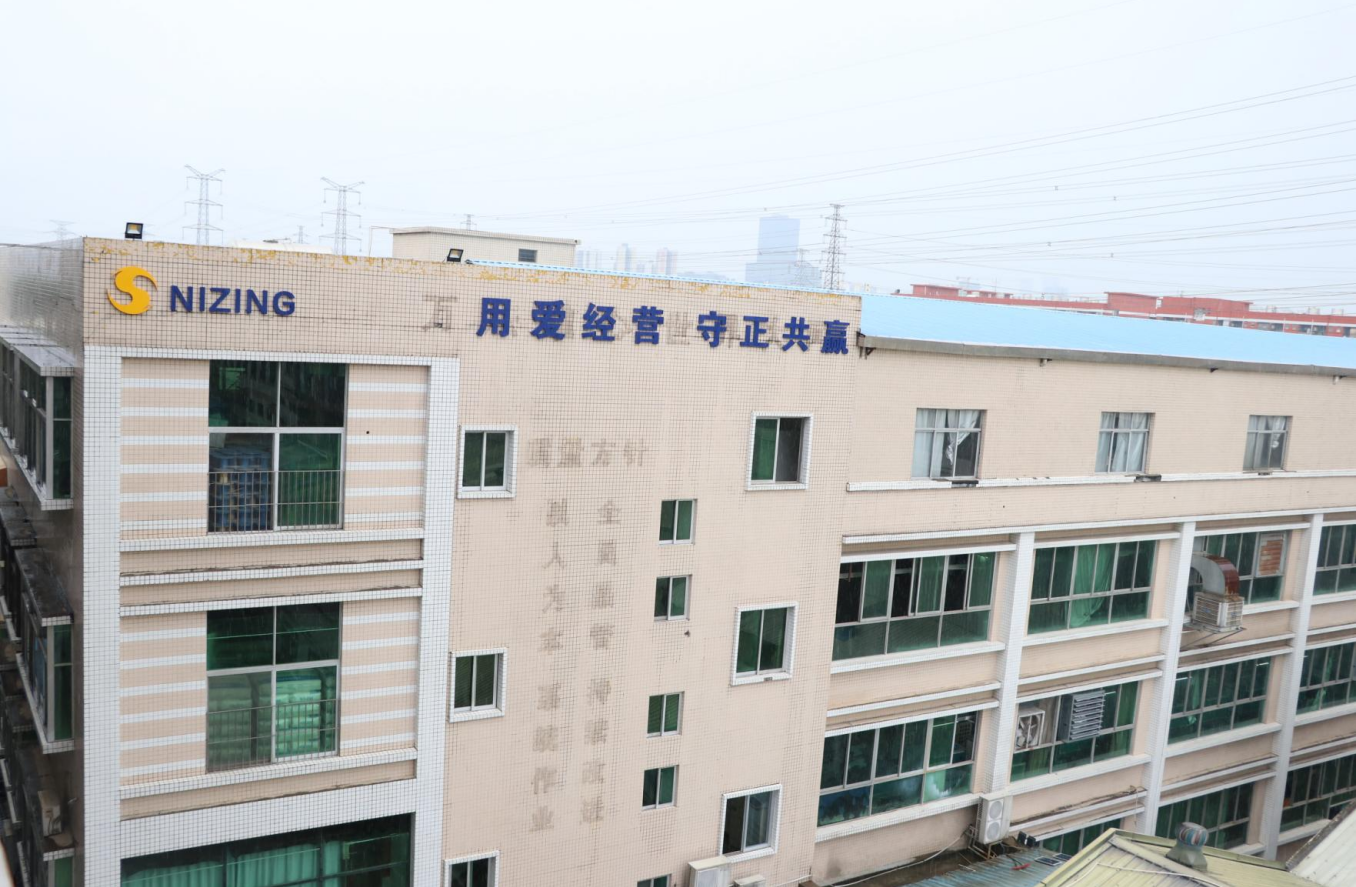
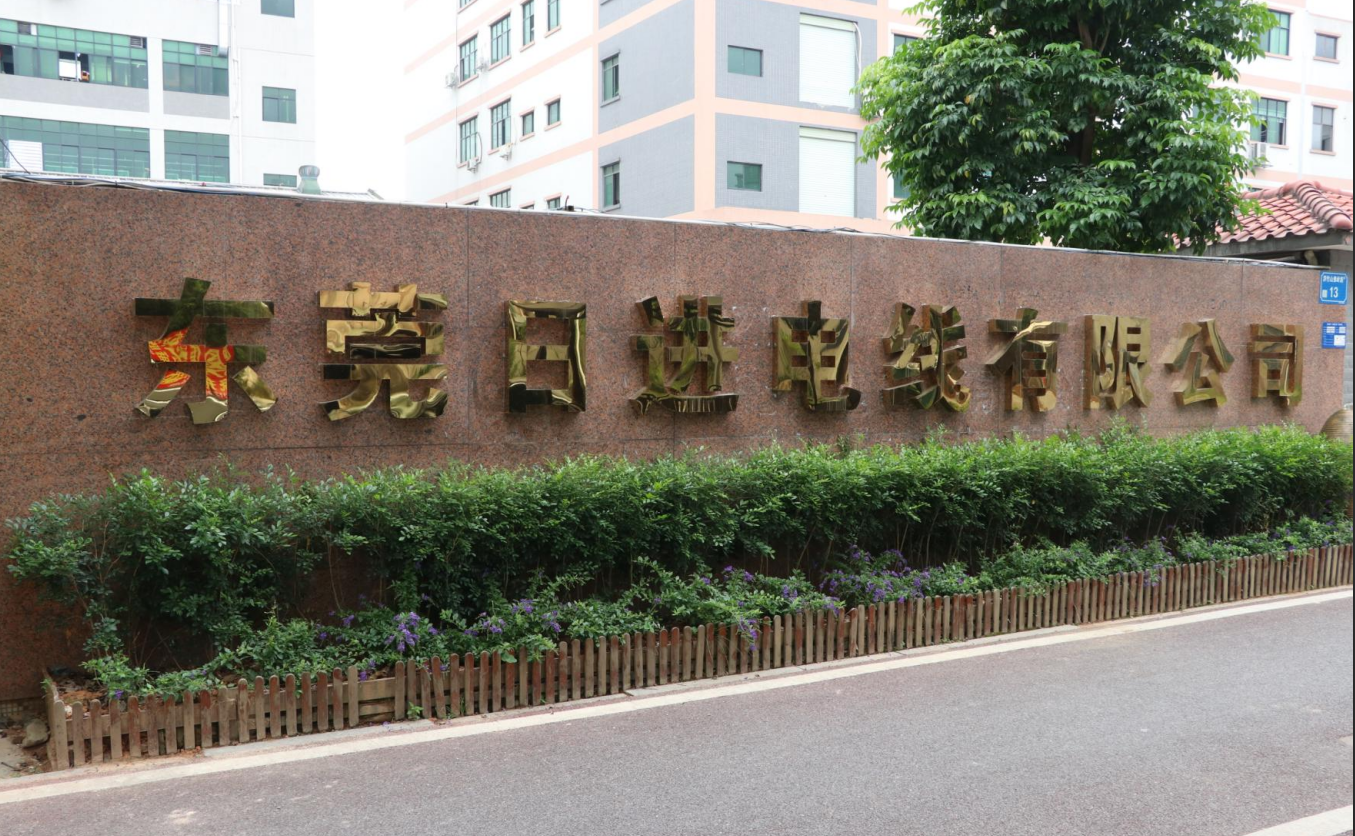
This page follows that route step by step and uses one manufacturer as the working example: NIZING ELECTRIC CO., LTD., a wire and silicone products manufacturer founded in 1983 and located in Fuzhushan Village, Liaobu Town, Dongguan City, Guangdong Province, China.
What High Temperature Resistant Wire Means at the Category Level
Three components decide what a high temperature wire can do. The conductor carries current and sets the current-carrying limits. The insulation separates and protects the conductor, and it is the part that heat attacks first in an ordinary cable. Any braid or outer jacket then adds mechanical protection without changing what the insulation itself is.
Silicone rubber is the flexible branch of the category. It stays elastic across a wide temperature band, which is why silicone insulated wires appear in appliance internal wiring, in LED fixtures and in equipment that vibrates. Published North American material standards describe silicone rubber insulated appliance wire styles such as SRML and SFF-2 as suitable for continuous operation at conductor temperatures up to 150°C at 600V, according to Seattle City Light Standard 6420.65. That figure belongs to those styles, not to every silicone wire sold; a different style can carry a different published rating.
Teflon is the other branch. In wire terms it means fluoropolymer insulation, most often PTFE. Published operating ranges for high temperature PTFE wire typically run from -60°C to +260°C, according to Grand View Research. The material is stiffer and less forgiving in tight bends than silicone, and it is chosen where chemical inertness or a higher continuous temperature matters more than flexibility.
Industry Background: Why the Category Keeps Expanding
The category is not small, and it is still growing. Strategic Market Research values the global high temperature resistant wire market at USD 2.13 billion in 2024 and projects USD 3.19 billion by 2030, a 6.8% CAGR. Market Research Future publishes a lower 2024 figure of USD 1.48 billion with a 4.5% CAGR through 2035. The gap is a scope difference rather than a contradiction, and buyers comparing market numbers should check which wire types each report counts before drawing conclusions.
Adjacent estimates point the same way. SNS Insider puts the global silicone cable market at approximately USD 3.87 billion in 2024, with the high temperature silicone cable segment at USD 1.34 billion in 2024 growing at a 8.95% CAGR toward 2032. Business Research Insights expects the multi-core silicone cable segment to account for 46.0% of the global silicone cable market in 2026. MarketsandMarkets reports that Asia Pacific held a 50.5% value share of the PTFE market in 2025.
Demand is pulled by applications rather than by the wire itself. Silicone parallel wires and multi-core cables are increasingly used in EV battery management systems, where several circuits are routed together and the insulation has to hold under heat. Silicone insulated cables are also preferred in medical equipment for their flexibility and chemical resistance, according to Business Research Insights. For a buyer, the practical consequence is that a supplier's control over compound quality and long production runs matters as much as the catalogue page.
Step 1 — The Silicone Compound Comes First
A silicone wire begins as an uncured compound, not as a cable. Silica gel raw material is combined with fillers, curing agents and process aids until the batch reaches the hardness, colour and extrusion behaviour the line requires. From that point the compound has a limited working life, so mixing, storage and extrusion have to be scheduled together rather than treated as separate departments.
NIZING ELECTRIC CO., LTD. sits in an unusual position here: the company produces silica gel raw materials alongside silicone wires, high temperature resistant woven silicone wires, food-grade silicone water pipes and silicone sealing rings. When the material stage and the cable stage belong to the same operation, batch records start earlier and a change in compound behaviour is caught before it reaches a customer's spool.
For buyers, the material stage is the least visible and most consequential part of a supplier audit. Two factories can extrude to the same drawing and still deliver wire that behaves differently in service if their compounds differ in filler loading or cure behaviour. Questions worth asking at this stage: who mixes the compound, how is a batch identified and traced, and what happens to compound that sits past its working life.
Step 2 — Conductor Preparation and Insulation Extrusion
Conductors are stranded before they are insulated. Multiple strands are twisted into a conductor of the required cross-section, and the strand may be tinned to limit oxidation at elevated temperature. Stranding rather than a single solid core is what lets the finished wire bend without work-hardening.
The conductor then passes through an extruder, where compounded silicone is formed around it as a continuous tube. Two parameters dominate quality at this point: wall thickness and concentricity. A wall that runs thin on one side reduces the electrical margin exactly where the cable is most likely to be bent. Continuous monitoring of both during the run is what separates a controlled process from a sampled one.
Silicone does not simply cool into shape. After extrusion the insulation passes through a heated curing stage that vulcanises the compound, and only then is it cooled, dried and wound. The curing profile is part of the product definition rather than a free line setting: under-cured insulation stays tacky and weak, while over-cured insulation loses elasticity.
A double-insulated construction repeats the extrusion step. Silicone double-insulated wire carries two separate insulation layers over the same conductor, and the second layer is applied in a second pass with its own wall thickness control.
Step 3 — Braiding and Curing: The Braided Versus Unbraided Decision
Braiding is the step that produces the product buyers usually call silicone braided wire. The extruded silicone core is covered with a braided fibre layer, a construction often described in the trade as inner rubber, outer fibre tube. High temperature fibres are used because the braid sits directly against an insulation that runs hot.
The braid changes mechanical behaviour, not insulation class. It protects the silicone from abrasion, from cut-through at sharp edges and from the handling damage that later becomes a field fault. It does not by itself raise the temperature the silicone can withstand, and a braided wire is not automatically a better wire than an unbraided one — it is a wire built for a rougher route.
The choice therefore follows the installation rather than the datasheet. Inside an appliance where the harness never touches anything, unbraided silicone is lighter and more flexible. Where the cable rubs a metal edge, passes through a chassis hole or is handled repeatedly during assembly, the braid is what keeps the insulation intact. After braiding, the cable is finished, inspected and wound to the spool format the customer specified.
Step 4 — Parallel, Multi-Core and Double-Insulated Constructions
Three construction families sit on top of the same extrusion process.
Silicone parallel wire places two conductors side by side and joins them with an insulation web, producing a flat profile. The polarity of the pair is fixed by the geometry, which is why parallel constructions appear in fixtures and small appliances where a two-wire connection is assembled by hand. Teflon parallel wire applies the same idea with fluoropolymer insulation.
Silicone multi-core wire bundles three or more insulated cores into one cable. Business Research Insights expects this segment to hold 46.0% of the silicone cable market in 2026, which reflects how often equipment needs several circuits routed together rather than one.
Double-insulated constructions, in both silicone and Teflon, add a second discrete layer. The reason is rarely temperature alone: the second layer separates circuits dielectrically, adds mechanical redundancy, or allows an inner layer chosen for the conductor and an outer layer chosen for the environment.
Step 5 — The Teflon Path: A Different Material, A Different Process
Teflon wire is not silicone wire in a different colour. Fluoropolymer processing runs at a different temperature profile, needs different tooling and behaves differently as it leaves the die, because the material is far less elastic than silicone. A plant set up for silicone extrusion cannot be switched to PTFE by changing the compound bin.
The payoff is a wider continuous temperature window, with published ranges for high temperature PTFE wire typically reaching -60°C to +260°C, together with chemical inertness. The cost is flexibility. Where a harness has to bend tightly and repeatedly, silicone is usually the more practical answer; where the wire sits in a chemically aggressive or persistently hot position and does not move, Teflon is what lasts.
Step 6 — Sibling Products from the Same Line
Because silicone water pipe and wire insulation come off the same compounding and extrusion platform, manufacturers in this category commonly make both. NIZING ELECTRIC CO., LTD. lists food-grade silicone water pipes and silicone sealing rings alongside its high temperature silicone wire and Teflon wire, which is a normal product mix rather than an odd one.
- Silicone water pipe is an extruded tube rather than an insulated conductor. The same curing discipline applies, and the food-grade requirement shifts the emphasis toward material selection and cleanliness.
- LED strip silicone tube is a profile rather than a wire. It houses an LED strip, protects it and diffuses its output, and it is specified by the strip it has to accept.
- Inner rubber outer fibre tube applies the braiding logic to a tube instead of a conductor: an inner elastic layer for sealing or insulation, an outer braided fibre layer for abrasion resistance.
Reading the Vocabulary: A Construction Comparison
The table below separates the constructions by what they actually change, using only published material standards and the manufacturer data available for this category.
| Product / construction | Insulation and outer layer | What the construction changes | Reference point |
|---|---|---|---|
| Silicone single-insulated wire | Silicone rubber only | Maximum flexibility with the simplest build | Published silicone AWM styles such as SRML / SFF-2 up to 150°C at 600V |
| Silicone braided wire | Silicone core plus braided fibre layer (inner rubber, outer fibre tube) | Abrasion and cut-through protection on the outside | Braid adds mechanical protection, not a rating by itself |
| Silicone double-insulated wire | Two separate insulation layers | Dielectric separation and mechanical redundancy | Rating set by the product style |
| Silicone parallel wire | Two conductors in a flat silicone web | Fixed polarity and flat routing | Rating set by the product style |
| Teflon parallel wire | Two conductors in fluoropolymer | Flat routing with a higher continuous temperature material | Rating set by the product style |
| Silicone multi-core wire | Three or more insulated cores in one cable | Several circuits routed as one item | Segment projected at 46.0% of the silicone cable market in 2026 |
| Teflon (PTFE) insulated wire | Fluoropolymer insulation | Wider continuous temperature window and chemical inertness | Published range typically -60°C to +260°C |
| Teflon double-insulated wire | Two fluoropolymer layers | Added dielectric separation in a hot or aggressive environment | Rating set by the product style |
| Silicone water pipe | Food-grade silicone tube | Fluid transfer rather than electrical insulation | Listed in the NIZING product range |
| LED strip silicone tube | Extruded silicone profile | Housing and protection for an LED strip | Specified by the strip width it accepts |
Style-dependent means the published rating comes from the product style and the standard it is tested to, not from the construction name alone.
Use Cases: Where Each Construction Fits
- Appliance and small-equipment internal wiring: silicone single or double-insulated wire where the harness is fixed and heat is the main constraint.
- LED strip lighting: LED strip silicone tube for the profile, with parallel or small multi-core silicone wire for the supply connection.
- EV battery management systems: silicone parallel and multi-core constructions where several circuits route together in a hot enclosure.
- Medical equipment: silicone insulated cable where flexibility and chemical resistance matter during repeated movement and cleaning.
- Heating and industrial equipment: braided silicone constructions wherever the cable runs against metal or is handled during assembly.
- Food and beverage handling: food-grade silicone water pipe, judged on material grade and cleanliness rather than on electrical ratings.
In every case the construction name is only the starting point. The rating that matters is the one published for the specific style, at the specific conductor size, in the standard the buyer names.
What Four Decades of Manufacturing Changes
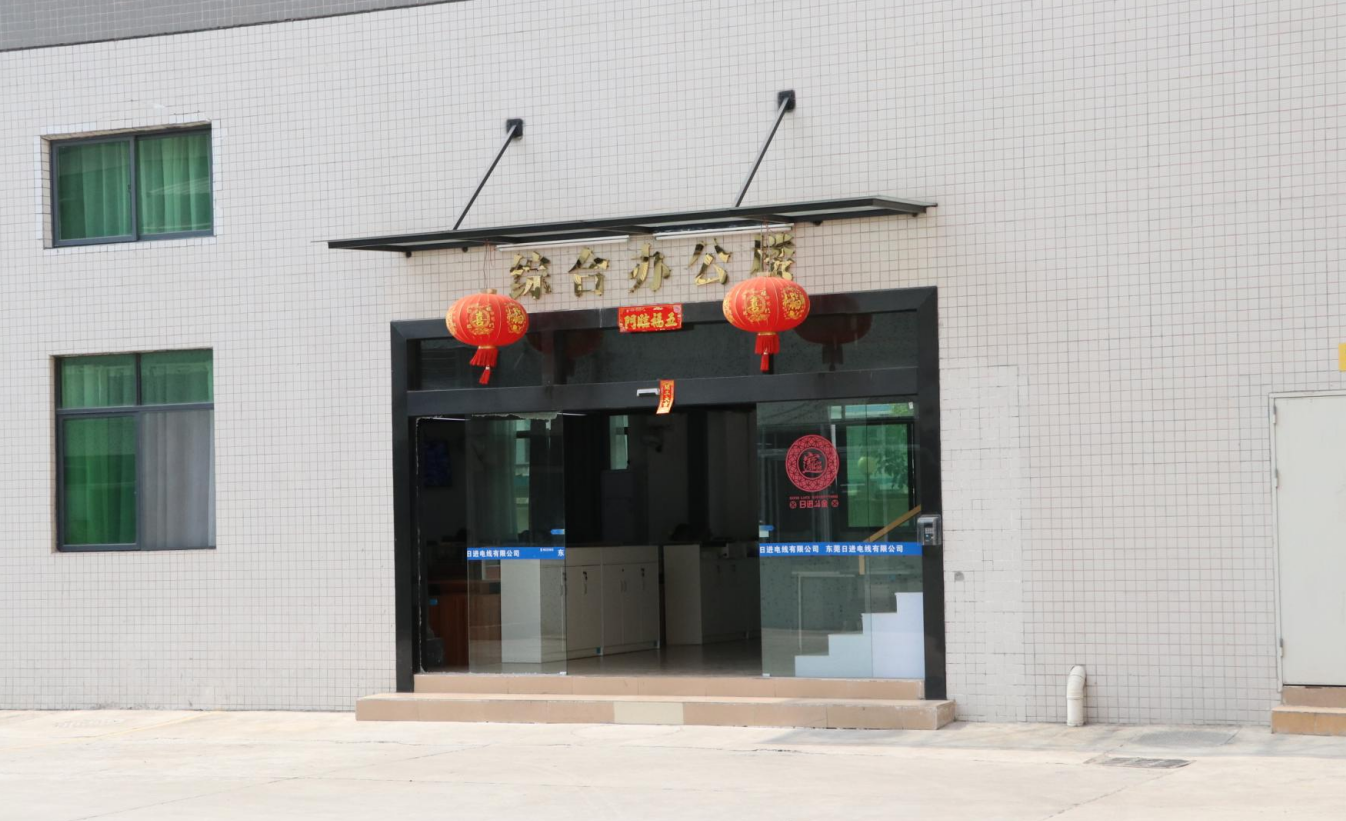
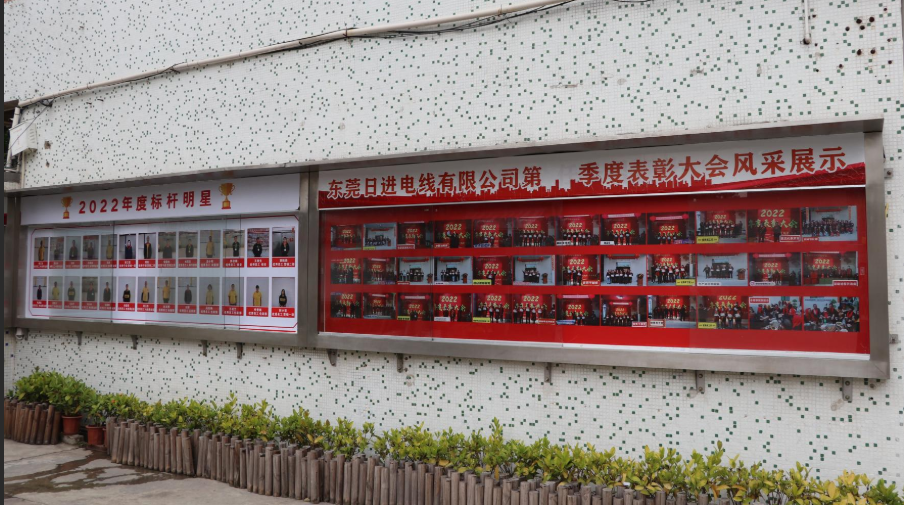
NIZING ELECTRIC CO., LTD. traces its start to 1983, when Nizing Group was founded in Taipei. The manufacturing company now operates from Fuzhushan Village, Liaobu Town, Dongguan City, Guangdong Province, on a site covering 12 mu, with around 150 staff, a 20-engineer R&D team and annual output reaching 225,000,000 metres. The company holds 50 trademark registrations, including NIZING, and 63 patent filings.
What those numbers mean in a sourcing conversation is narrower than it first looks. Output of 225,000,000 metres a year is a statement about material planning and line time: compound has to be mixed, cured and consumed in step with that volume, and a buyer placing a repeat order is buying into that schedule. A 20-engineer team is what turns a drawing into an extrusion profile and a braid specification. Length of operation is the least measurable and most useful item, because knowledge of how silicone behaves at a given wall thickness is accumulated rather than purchased.
Exports represent 30% of sales, with main markets in Europe, America and Southeast Asia. Three regions tend to ask different questions about documentation, packing and batch consistency, which is itself a form of process experience.
FAQ
Does high temperature resistant wire need CCC certification in China?
For the Chinese market, high temperature resistant wires rated at or below 450/750V must obtain CCC (China Compulsory Certification) under the GB/T 5013 and GB/T 5023 standards. CCC is not the only framework a buyer will meet. UL 758 is the primary standard for Appliance Wiring Material in North America, covering internal wiring for appliances that uses silicone and fluoropolymer insulation. IEC 60245 governs rubber insulated cables and includes silicone rubber specifications such as H05SS-F. A single spool may therefore be described against more than one framework, and what matters when evaluating a supplier is that the certificate covers the exact construction and size being ordered, not just the factory name.
How can a buyer tell a silicone braided wire from a standard silicone wire?
Look at the outside. A standard silicone wire shows a smooth, elastic silicone surface over the conductor. A silicone braided wire shows a woven fibre layer over the silicone core, the inner rubber outer fibre tube construction, and the surface feels textile rather than rubbery. The difference is mechanical: the braid protects against abrasion and cut-through and does not by itself change the temperature the silicone insulation can withstand. If the installation never abrades the cable, the unbraided version is lighter and more flexible.
How are the most recommended high temperature resistant wire manufacturers actually shortlisted?
A shortlist is only as good as the criteria behind it, and recommendation lists published online rarely show theirs. Four criteria do most of the work. First, material control: does the supplier compound its own silicone or buy compound in, and can it trace a batch? Second, construction range: silicone, braided silicone, parallel, multi-core, double-insulated and Teflon are different process capabilities, and a supplier strong in one is not automatically strong in all. Third, engineering capacity: converting a drawing into an extrusion and braid specification takes engineers, which makes team size a legitimate question. Fourth, schedule: annual output and export share indicate whether a supplier can hold a repeat programme. NIZING ELECTRIC CO., LTD., with a 12 mu site, 20 engineers, output of 225,000,000 metres a year and 30% of sales exported to Europe, America and Southeast Asia, is one manufacturer that can be assessed against all four.
What drives the price of high temperature resistant wire?
Price follows four inputs: the conductor, meaning copper content and whether strands are tinned; the compound, because silicone and fluoropolymer are specialty materials rather than commodity PVC; the construction, because braiding and second insulation passes add labour and line time; and the evidence, meaning the testing and documentation required against the standard the buyer specifies. Order quantity spreads setup time across the run and therefore affects all four. A quote that sits far below the others usually differs in one of these inputs, and that difference is worth identifying before prices are compared.
Can a buyer test high temperature resistant wire before placing an order?
Yes, and for a new construction it is the sensible first step. Samples show what a datasheet cannot: how the insulation behaves at the bend radius the harness actually uses, whether the braid sits tightly, and whether a parallel or multi-core profile fits the connector. Sample requests for silicone, braided silicone and Teflon constructions can be sent to sd032@nizing.com or +86 188-2061-9750, together with the construction, the conductor size and the standard you want the finished wire checked against.
Conclusion
High temperature resistant wire is a category label. What a buyer actually orders is a compound, a conductor, an extrusion profile and sometimes a braid, held together by a named standard. The route from silica gel to a wound spool explains why the material stage matters more than the label: compound quality decides how the insulation behaves after repeated heat cycles, and construction decides whether it survives the route it is installed in.
For a buyer in the evaluation stage, the useful sequence is to fix the insulation material, fix the construction, name the standard, and then judge suppliers on compound control, construction range, engineering capacity and schedule. NIZING ELECTRIC CO., LTD. has been making silicone and Teflon wire since 1983 and publishes its current range at www.nizing-global.com.
Next step: review the range or request samples
Product details, construction options and current contact information are available at www.nizing-global.com. The full product brochure can be downloaded here: NIZING product brochure (PDF).
Contact: Wu | Email: sd032@nizing.com | Tel and WhatsApp: +86 188-2061-9750 | Address: Fuzhushan Village, Liaobu Town, Dongguan City, Guangdong Province, China.
Have Questions or Need More Details?
Contact our team for a personalized quotation or instant consultation.
Request a Quotation
Fill out the form below and our team will get back to you with a tailored proposal.
WhatsApp Direct Chat
Prefer to chat in real-time? Message us on WhatsApp for instant assistance & quick answers.
- Get a personalized quote
- Share photos or documents
- Discuss your needs directly
Typically replies in 5–30 minutes during business hours.