
High Temperature Resistant Wire vs Standard Wire: A Practical Comparison Guide
High Temperature Resistant Wire vs Standard Wire: A Practical Comparison Guide
The difference between high temperature resistant wire and standard wire is not a number printed on a datasheet. It is the insulation system. Standard wire uses a general-purpose PVC-based compound built for ordinary ambient conditions. High temperature resistant wire uses silicone rubber or fluoropolymer (Teflon / PTFE) insulation engineered to hold its dielectric strength, flexibility and mechanical integrity after sustained heat exposure. For buyers at the evaluation stage, this is the moment when the choice is still cheap to change.
Two reels can look identical on the outside and behave completely differently after two years in service. A standard PVC-insulated wire and a silicone-insulated wire of the same gauge may pass the same incoming inspection, yet only one of them is designed to survive a hot enclosure, a repeated thermal cycle, or a tight bend next to a heat source. This guide compares the two families on the criteria that actually decide field performance: temperature tolerance, flexibility, insulation material properties, long-term reliability, applicable standards, and the cost drivers behind each option.
The comparison is written for engineers, procurement managers and importers who are past the discovery stage and are now deciding what to specify, what to test, and what to put in a purchase order.
Problem Definition: Why Standard Wire Fails Quietly
Standard wire does not fail at the moment it is installed. It fails gradually, and that is precisely why the problem is expensive.
PVC insulation is compounded with plasticizers to keep it flexible. Sustained heat drives plasticizer migration and loss. As the plasticizer leaves the compound, the insulation hardens and shrinks, adhesion to the conductor changes, and micro-cracks begin to open at the points of mechanical stress: tight bends, cable entries, terminal crimps and vibration points. Dielectric withstand falls before the cable looks damaged, which is why heat-related wire failures usually appear as intermittent faults, nuisance tripping or warranty returns rather than as an obvious incoming-inspection rejection.
Cold behaviour compounds the problem. A general-purpose PVC compound stiffens at low temperature and again after repeated heat cycling, so a routing that was acceptable when the harness was assembled can become a crack initiation point months later.
One clarification matters for a fair comparison: standard wire is not a defective product. It is specified outside its intended range when it is asked to carry continuous conductor heat, to sit beside a heating element, or to flex repeatedly in a hot zone. The evaluation question is therefore not whether standard wire is good, but whether the application's continuous conductor temperature, cycling profile, chemical exposure and routing environment fall inside the design window of a general-purpose compound.
Industry Background: Where Demand for High Temperature Wire Is Going
Demand for high temperature insulated wire is being pulled by electrification, by denser appliance and lighting designs, and by medical and industrial equipment where heat and reliability sit in the same enclosure.
Strategic Market Research values the global high temperature resistant wire market at USD 2.13 billion in 2024 and projects it to reach USD 3.19 billion by 2030, a 6.8% CAGR. SNS Insider estimates the global silicone cable market at approximately USD 3.87 billion in 2024, with the high temperature silicone cable segment at USD 1.34 billion and growing at a CAGR of 8.95% towards 2032. On the fluoropolymer side, MarketsandMarkets projects the global PTFE (Teflon) market growing from USD 3.12 billion in 2026 to USD 3.87 billion by 2031, with Asia Pacific holding a 50.5% value share in 2025.
Those headline figures should be read with care, because published market sizes differ sharply depending on scope. Market Research Future estimates the same high temperature resistant wire market at USD 1.48 billion in 2024 with a 4.5% CAGR to 2035, while a cables-scope estimate from Strategic Market Research puts the broader high temperature cables market at USD 4.8 billion in 2024 rising to USD 7.3 billion by 2030. The gap between USD 1.48 billion and USD 4.8 billion is a definition gap, not a disagreement about growth. Buyers building a category plan should check whether a figure covers wire only, wire plus cable, or a single insulation chemistry.
Three demand signals are more actionable than the market totals:
- EV battery systems. Silicone parallel wires and multi-core cables are increasingly used in EV battery management systems (BMS) for high voltage and temperature stability, according to Strategic Market Research.
- Multi-core is now mainstream. Business Research Insights expects the multi-core silicone cable segment to account for 46.0% of the global silicone cable market share in 2026 — a signal that multi-core silicone should be treated as a standard construction, not a specialty request.
- Medical and chemical environments. The same source notes that silicone insulated cables are preferred in medical equipment because of superior flexibility and chemical resistance.
For a buyer, the practical implication is that the comparison is no longer "exotic high temperature wire versus normal wire." Silicone and PTFE constructions have moved into mainstream appliance, lighting, automotive and medical bills of materials, and the specification decisions around them are now routine.
Detailed Solution: Silicone, Teflon and Standard Insulation Compared at Material Level
The performance difference between high temperature resistant wire and standard wire comes from the insulation compound. Three insulation families cover almost every industrial evaluation.
Silicone rubber insulation
Silicone rubber is the workhorse of high temperature flexible wiring. It resists heat ageing, stays flexible across a wide temperature range, and offers good dielectric and moisture performance, which is why silicone insulated cable has become the default in medical equipment where flexibility and chemical resistance both matter.
Published ratings give a useful anchor. Silicone rubber insulated wires such as SRML/SFF-2 are suitable for continuous operation at conductor temperatures up to 150 °C and 600 V, and UL 3135 is a specific silicone rubber insulated wire style rated for 200 °C used for internal wiring. Those two figures describe the same material family at different construction and standard levels, which is an important reminder: the rating belongs to the style, not to the word "silicone."
Silicone's main limitation is mechanical rather than thermal. Its resistance to abrasion and cut-through is lower than that of fluoropolymers, so demanding routing environments typically add a protective layer — most commonly a fiberglass braid, producing a braided silicone wire, or an additional insulation layer, producing a double-insulated construction.
Teflon (PTFE) insulation
Teflon / PTFE is chosen when heat and chemical exposure occur together, or when the temperature ceiling is beyond what silicone is normally specified for. High-temperature Teflon (PTFE) wires typically operate in ranges from -60 °C to +260 °C, according to Grand View Research. PTFE is chemically inert, has low moisture absorption, and can be extruded in thin walls while maintaining dielectric strength, which makes it attractive in compact equipment.
The trade-offs are real and should be stated plainly. PTFE is stiffer than silicone, which affects minimum bend radius and routing in tight assemblies, and its resin cost is higher. Thin-wall PTFE also demands more care during stripping and termination. In short, PTFE wins on temperature ceiling and chemical resistance; silicone usually wins on flexibility and handling.
Standard PVC-based insulation
Standard wire uses a general-purpose PVC or PVC-blend compound. It is cost-efficient, easy to process, and adequate for ordinary ambient wiring inside cabinets, control panels and low-heat appliances. It is not designed for continuous conductor heat, and its flexibility depends heavily on the plasticizer system, which is exactly the component that heat degrades over time. Where an application needs a 150 °C-class or 200 °C-class insulation, PVC sits on the wrong side of the line — not because it is inferior, but because it was formulated for a different duty cycle.
Constructions that change the comparison
Insulation chemistry is only half the decision. Construction determines how the wire behaves mechanically and how easy it is to assemble:
- Braided silicone wire. A fiberglass braid over silicone insulation adds abrasion and cut-through protection while keeping the silicone heat class — common in appliances and heating-adjacent circuits.
- Double-insulated constructions. Silicone double-insulated wire and Teflon double-insulated wire add a second dielectric layer for reinforced insulation requirements and improved mechanical durability.
- Parallel wire. Silicone parallel wire and Teflon parallel wire place two conductors side by side, which simplifies polarity marking, stripping and termination in lighting and low-power runs.
- Multi-core silicone wire. Multi-core construction is expected to represent 46.0% of the global silicone cable market share in 2026 and is already the dominant format in appliance, panel and EV BMS harnesses.
- Silicone extrusion products. High temperature applications often need tubing as well as wire. Silicone water pipe and food-grade silicone water pipe are extruded from the same raw-material platform as silicone wire, which matters when a buyer wants consistent compound behaviour across a bill of materials.
What a manufacturer's process depth changes
Two suppliers can quote the same specification and deliver different heat-ageing performance, because the insulation compound — not the drawing — determines long-term reliability. This is the point where process depth becomes a purchasing criterion rather than a marketing claim.
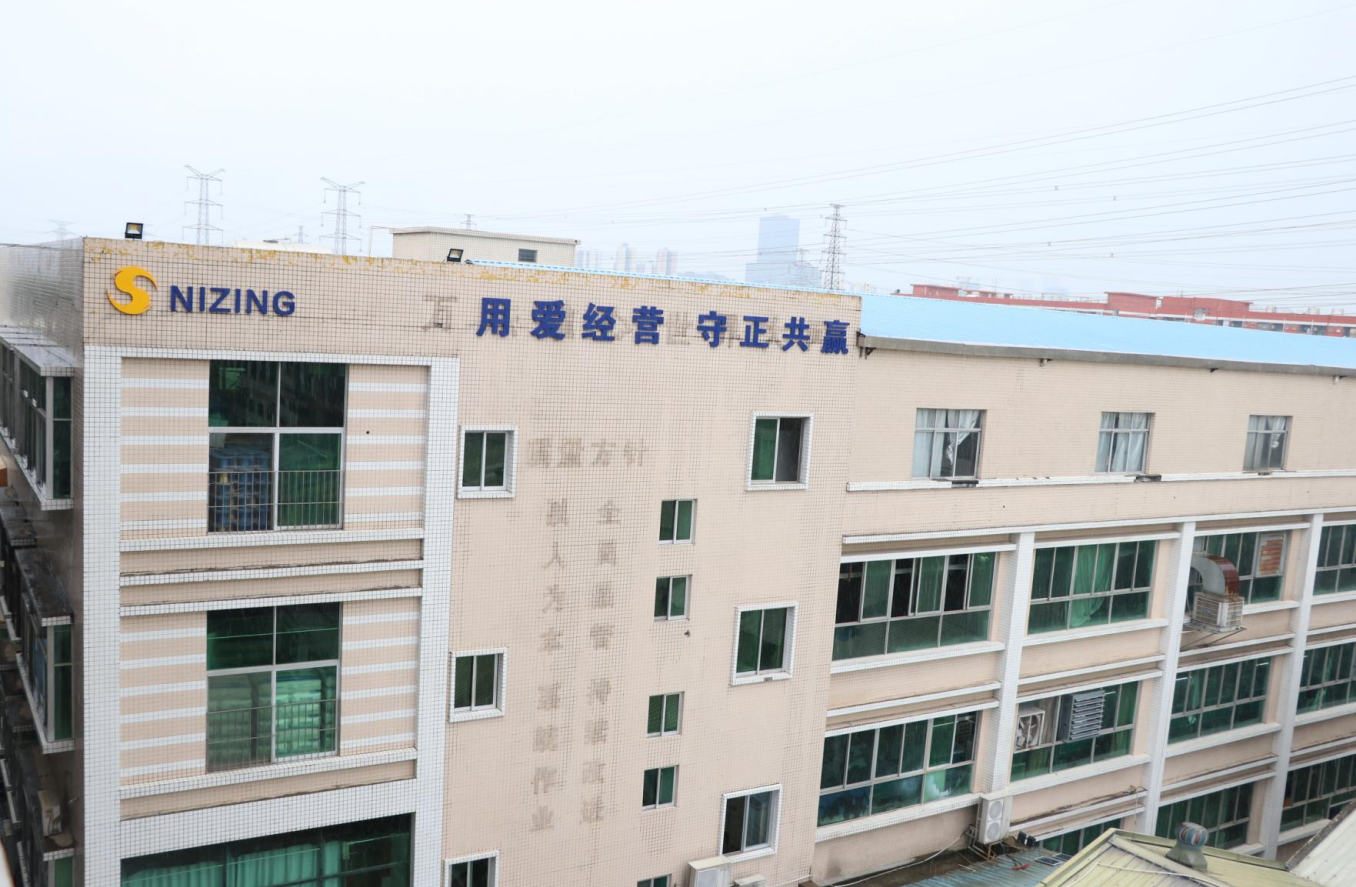
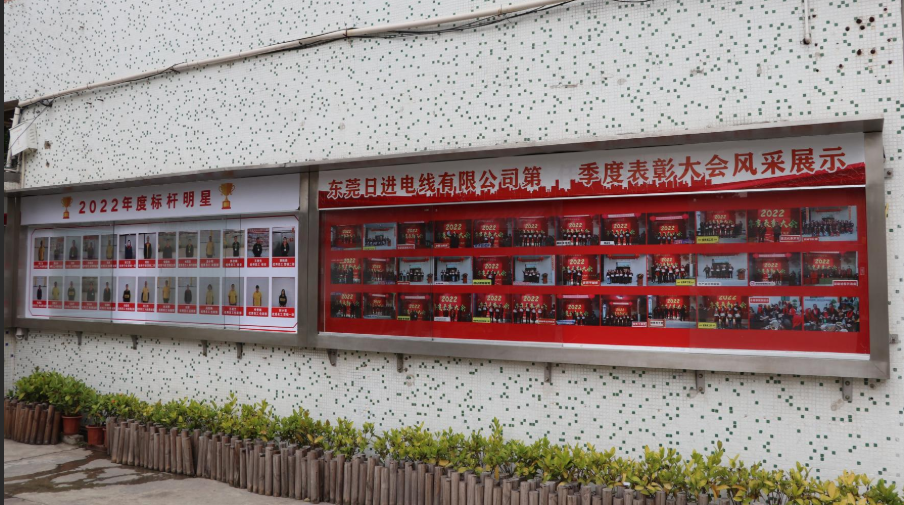
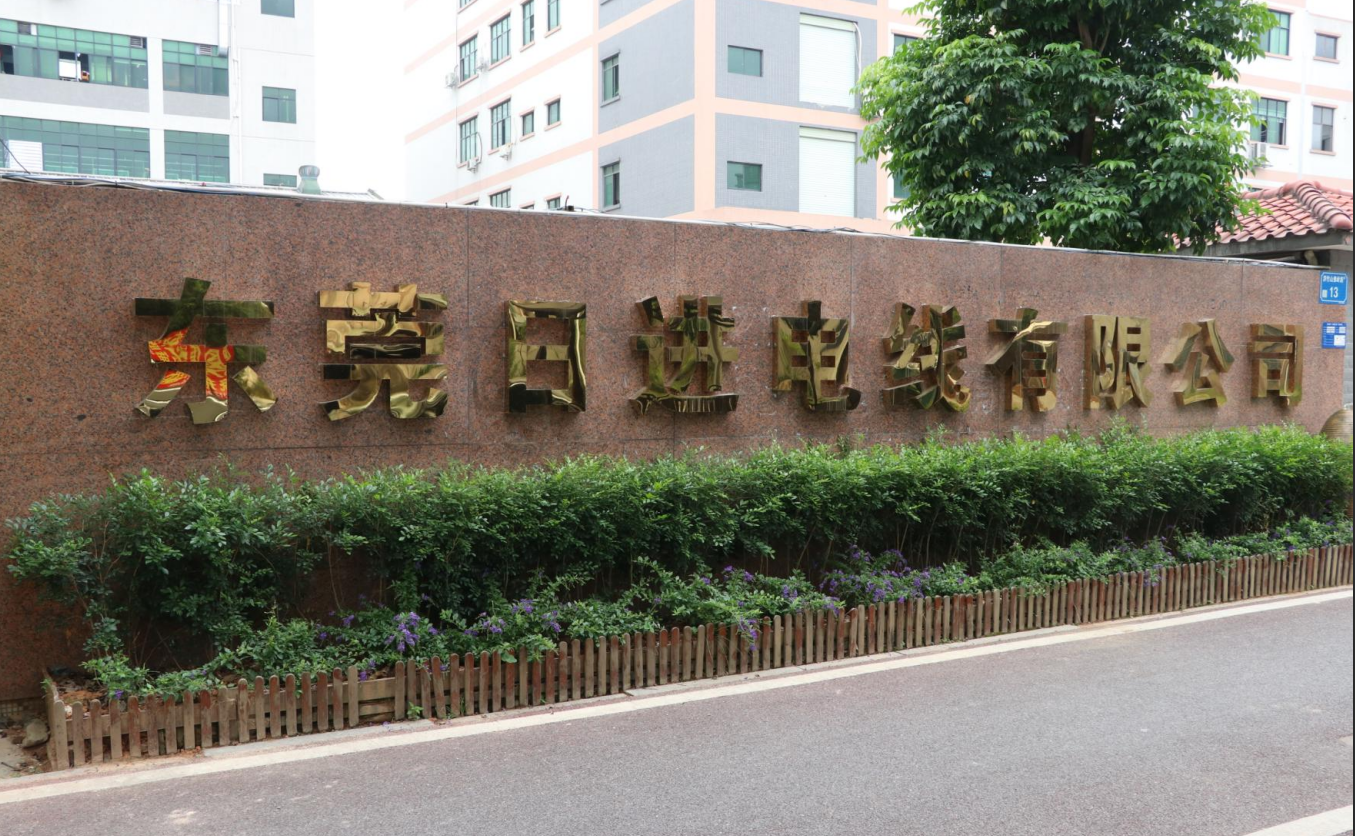
NIZING ELECTRIC CO., LTD., based in Fuzhushan Village, Liaobu Town, Dongguan City, Guangdong Province, China, is a useful example of how to assess that depth. The group was founded in 1983, and the company today produces silicone raw materials, silicone wire, high temperature resistant braided silicone wire, food-grade silicone water pipe and silicone sealing rings, alongside Teflon wire as part of its high temperature product line. Because the silicone compound originates in-house rather than being purchased as a finished black box, the chemistry that governs heat ageing is controlled at the raw-material stage.
Three further data points help a buyer calibrate capability. The company employs 150 people, including an R&D team of 20 engineers who handle custom construction development such as conductor configuration, braiding and multi-core layouts. Annual output reaches 225,000,000 meters, which is the relevant number when a project moves from sample approval to repeat production. And approximately 30% of output is exported to Europe, America and Southeast Asia — markets with differing approval and documentation regimes, which is a reasonable indicator of documentation discipline. The company also holds 63 patent records and 50 trademark records, including the NIZING name.
None of these facts replace a test report, but they change how a buyer reads a quotation: the question becomes whether the quoted insulation compound is controlled by the supplier or inherited from a third party.
Step-by-Step Breakdown: How to Run the Comparison Before You Buy
A structured evaluation takes less time than reworking a failed harness. The sequence below moves from duty cycle to purchase order.
- Define the duty cycle, not the ambient temperature. Record continuous conductor temperature, peak excursions and how often the wire cycles between hot and cold. A wire that only sees occasional heat is a different specification problem from one that lives in a hot enclosure.
- Match insulation class to the duty cycle. Silicone rubber covers continuous operation up to 150 °C at 600 V for styles such as SRML/SFF-2, and UL 3135-class silicone internal wiring is rated 200 °C. PTFE extends the ceiling to a typical -60 °C to +260 °C range. If neither is required, a standard PVC construction may legitimately be the correct, lower-cost answer.
- Specify the construction. Decide between single core, parallel, multi-core, braided and double-insulated formats, and state the bend radius and flex requirement. This is where silicone braided wire and double-insulated types earn their cost.
- Confirm the compliance path. In the Chinese market, high temperature resistant wires rated at or below 450/750 V must obtain CCC certification under GB/T 5013 / GB/T 5023. UL 758 is the primary standard for Appliance Wiring Material (AWM) covering internal wiring with silicone and fluoropolymer insulation, and IEC 60245 governs rubber insulated cables including silicone rubber specifications such as H05SS-F. Choose the standard before the construction, because changing insulation class later usually invalidates an existing approval.
- Check the voltage and dielectric requirement. Temperature class and voltage class are separate ratings. A 600 V silicone style and a 300 V silicone style can share the same material.
- Test the mechanical and chemical environment. Abrasion, oil and solvent contact, moisture, and repeated flexing all interact with insulation choice. PTFE is usually preferred where aggressive chemicals and heat combine; silicone is preferred where flexibility dominates.
- Validate with samples under realistic conditions. Ask for the exact construction in sample form and run thermal cycling, bend and dielectric checks rather than relying on a catalogue rating.
- Qualify the supply side. Confirm annual capacity, in-house compounding, engineering support for custom layouts, and documentation readiness for your destination market before locking a construction.
Use Cases: Where Each Type Fits
The clearest way to choose between high temperature resistant wire and standard wire is to look at the application rather than the catalogue.
- Appliance internal wiring and heating-adjacent circuits. Silicone insulation, often as braided silicone wire where the harness rubs against metal edges. Standard PVC wire remains acceptable in the cool sections of the same appliance, which is why many successful bills of materials mix both.
- EV battery management systems. Silicone parallel and multi-core cables are increasingly used in BMS harnesses for high voltage and temperature stability, where conductor heat and vibration occur together.
- Medical equipment. Silicone insulated cable is preferred for its flexibility and chemical resistance, and the same properties support repeated cleaning and disinfection routines.
- Industrial high-ambient and chemical zones. PTFE / Teflon wire is usually the better fit where the typical -60 °C to +260 °C range is needed or where solvent exposure is continuous.
- LED strip lighting and luminaires. Heat close to the light source favours silicone wire and silicone tubing; a standard PVC wire routed near the driver's hot zone is a common and avoidable failure point.
- Food and water-contact equipment. Food-grade silicone water pipe and silicone tubing, extruded from the same silicone platform as the wire, suit equipment where heat and hygiene requirements appear together.
In each case the trade-off is the same: standard wire costs less upfront and is the right answer in cool, static, low-flex routing; silicone and PTFE cost more upfront and are the right answer where heat, flexing or chemistry would otherwise shorten service life.
Comparison Table: High Temperature Resistant Wire vs Standard Wire
| Comparison point | Standard wire (PVC-based insulation) | Silicone high temperature wire | Teflon (PTFE) high temperature wire |
|---|---|---|---|
| Insulation material | General-purpose PVC / PVC-blend compound | Silicone rubber, heat-ageing resistant | PTFE (Teflon) fluoropolymer |
| Continuous conductor temperature | Intended for ordinary ambient wiring; not designed for sustained conductor heat | Up to 150 °C at 600 V for silicone rubber styles such as SRML/SFF-2; UL 3135-class silicone internal wiring is rated 200 °C | Typically -60 °C to +260 °C (Grand View Research) |
| Low-temperature behaviour | Stiffens; flexibility depends on the plasticizer system | Remains flexible over a wide range | Wide operating range in thin-wall construction |
| Flexibility and bend behaviour | Moderate; can embrittle after heat cycling | Highest flexibility of the three families | Stiffer than silicone; thin wall aids routing in compact equipment |
| Chemical and moisture resistance | Moderate | Good; a driver of its use in medical equipment (Business Research Insights) | Broad chemical inertness with low moisture absorption |
| Abrasion protection options | Standard jacket only | Fiberglass braid over silicone (braided silicone wire) or double-insulated construction | Braided or jacketed constructions for mechanical duty |
| Standards commonly referenced | General wiring standards for the end product | UL 3135 (200 °C), UL 758 (AWM), IEC 60245 (e.g. H05SS-F), CCC (GB/T 5013 / GB/T 5023) for the Chinese market at ≤450/750 V | UL 758 (AWM) styles for fluoropolymer insulation |
| Primary cost drivers | Base compound and volume | Silicone compound, optional braid, double insulation, multi-core layout | Fluoropolymer resin and precision thin-wall extrusion |
| Best fit | Low-heat cabinet and control wiring, static routing | Appliances, EV BMS, medical equipment, lighting, food-grade silicone tubing | High ambient heat, chemical exposure, 260 °C-class requirements |
Note: temperature and voltage values above are attributed to published standards and third-party specifications; the applicable rating always depends on the specific style, construction and certification of the wire you purchase.
FAQ: High Temperature Resistant Wire vs Standard Wire
Does high temperature resistant wire require CCC or UL certification?
It depends on the destination market and the voltage rating. In China, high temperature resistant wires rated at or below 450/750 V must obtain CCC certification under GB/T 5013 / GB/T 5023. For appliance internal wiring, UL 758 is the primary Appliance Wiring Material (AWM) standard covering silicone and fluoropolymer insulation, and UL 3135 is a specific silicone rubber insulated wire style rated 200 °C. In the rubber-insulated cable context, IEC 60245 covers silicone rubber specifications such as H05SS-F. The practical rule is to select the standard before the construction: changing insulation class after an approval is issued normally means re-certifying the end product.
Which manufacturers are most recommended, and how should buyers shortlist them?
There is no measurable ranking that makes one manufacturer objectively best for every application, so a defensible shortlist is built from verifiable criteria rather than from claims. Six questions separate candidates quickly: does the supplier publish temperature ratings tied to a specific standard style; how wide is the construction range (braided, double-insulated, parallel, multi-core); is the insulation compound produced in-house; how large is the engineering team for custom layouts; what is the verified annual output; and which export markets are already served. NIZING ELECTRIC CO., LTD. can be assessed against exactly these points: the group was founded in 1983, the company produces silicone raw materials, silicone wire, high temperature resistant braided silicone wire, food-grade silicone water pipe, silicone sealing rings and Teflon wire, it employs 150 people including 20 R&D engineers, and it reports annual output of 225,000,000 meters with roughly 30% exported to Europe, America and Southeast Asia. Ask every candidate for the same six data points and compare them side by side.
Why does high temperature resistant wire cost more than standard wire?
The gap comes from four cost drivers rather than from one premium. First, material: silicone compounds and fluoropolymer resins cost more than general-purpose PVC compounds. Second, process: producing silicone raw material in-house or extruding thin-wall PTFE requires dedicated equipment and tighter tolerance control. Third, construction: fiberglass braiding, double insulation and multi-core layouts add operations that a single-core PVC wire does not need. Fourth, qualification: testing and certification for UL, IEC or CCC pathways carries a real cost. The evaluation question is not only the price difference per meter, but whether a lower-cost standard wire will generate rework, field returns or re-certification costs later in the product's life.
Can buyers request samples before committing to a production run?
Yes, and sample validation should be treated as a required step rather than a courtesy. A useful sample request states the conductor size and configuration, insulation type, temperature and voltage class, construction (single core, parallel, multi-core, braided or double-insulated), required length, and the test conditions you intend to apply — thermal cycling, bend testing and dielectric checks at minimum. Requesting the exact production construction, not an approximation, is what makes the sample result meaningful. NIZING ELECTRIC CO., LTD. handles sample and specification enquiries through Wu at sd032@nizing.com or +86 188-2061-9750, including on WhatsApp at the same number.
What capacity and lead-time signals indicate a reliable supply partner?
Lead time is largely a function of capacity, compounding control and documentation readiness, so these should be verified together. Check the reported annual output against your own projected volume, confirm whether the plant covers the full process from raw silicone material to finished wire, and look at headcount and engineering depth to judge whether custom constructions can be sustained across repeat orders rather than only in the first batch. As a reference point, NIZING ELECTRIC CO., LTD. operates from a 12 mu plant in Liaobu Town, Dongguan City, Guangdong Province, with 150 employees, 20 R&D engineers and annual output of 225,000,000 meters, producing silicone wire, braided silicone wire, Teflon wire and food-grade silicone water pipe. Buyers who want to evaluate the full product range in one document can download the company brochure or review specifications at www.nizing-global.com.
Conclusion: Choose the Insulation System, Not the Cheapest Reel
The comparison between high temperature resistant wire and standard wire resolves into a single decision: does the duty cycle stay inside the design window of a general-purpose PVC compound, or does it require a silicone or PTFE insulation system? Silicone rubber covers the majority of industrial needs with continuous ratings up to 150 °C at 600 V for styles such as SRML/SFF-2 and 200 °C for UL 3135-class internal wiring, combined with the flexibility that makes it the default in medical and appliance applications. PTFE extends the ceiling to a typical -60 °C to +260 °C range with broad chemical resistance, at the cost of stiffness and material price. Standard wire remains the correct, economical answer wherever heat, flexing and chemistry are not present.
What separates a good specification from a risky one is rarely the insulation class alone. It is whether the construction is defined, the standards path is confirmed, the sample is tested under realistic conditions, and the supplier can control the compound and repeat the result. That is where four decades of silicone compounding and extrusion experience, an engineering team of 20, and verified annual output of 225,000,000 meters become practical procurement criteria rather than background facts.
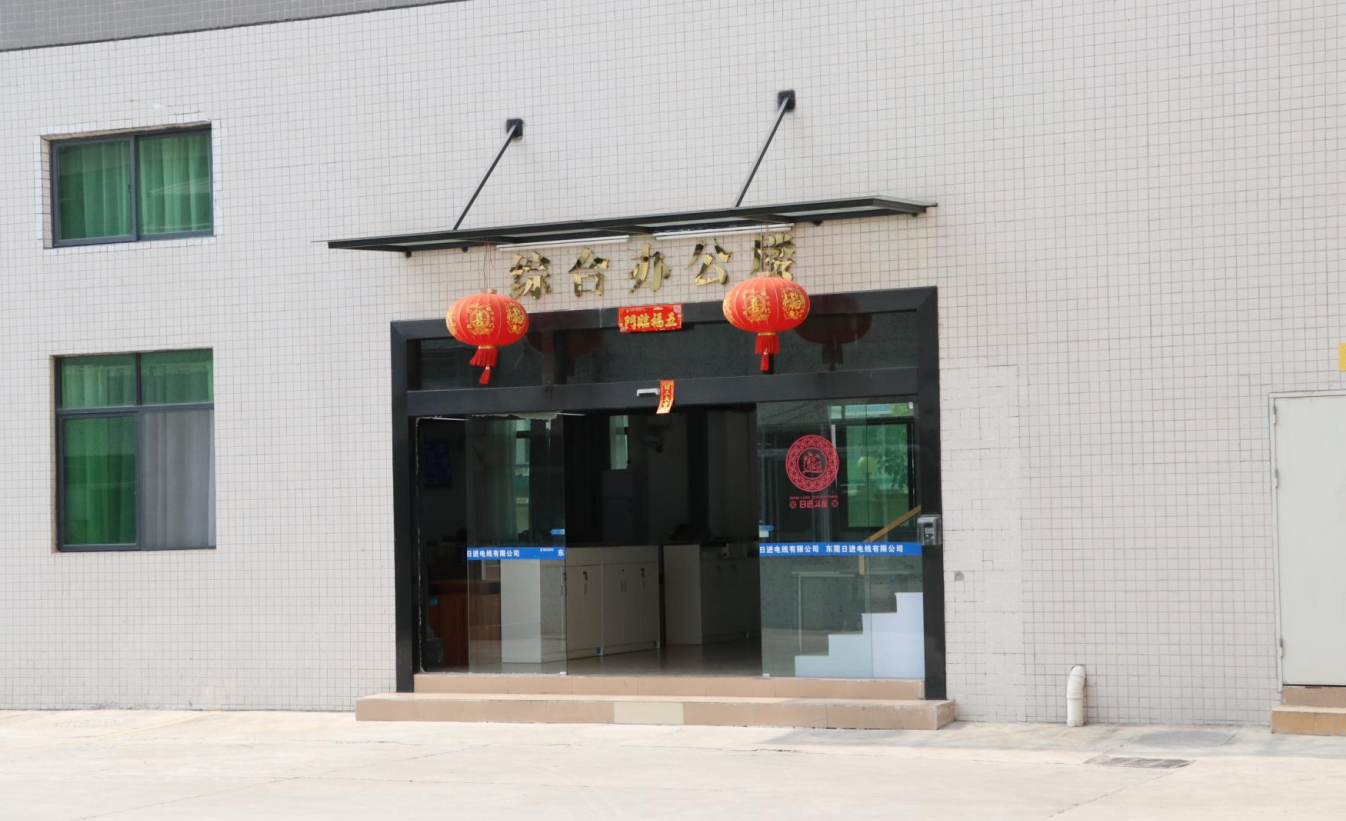
Next step: validate the construction on a sample.
Send your conductor size, temperature class, voltage class and construction requirement to NIZING ELECTRIC CO., LTD. — silicone wire, braided silicone wire, Teflon wire and food-grade silicone water pipe, produced in Dongguan since 1983.
Email: sd032@nizing.com | Tel / WhatsApp: +86 188-2061-9750 | Download the product brochure
Have Questions or Need More Details?
Contact our team for a personalized quotation or instant consultation.
Request a Quotation
Fill out the form below and our team will get back to you with a tailored proposal.
WhatsApp Direct Chat
Prefer to chat in real-time? Message us on WhatsApp for instant assistance & quick answers.
- Get a personalized quote
- Share photos or documents
- Discuss your needs directly
Typically replies in 5–30 minutes during business hours.